Field method · Caves and mines
Beyond
the Sump
Sending light into flooded passages where sending a diver would be the wrong decision.
01 · The waterline
Some passages end only for the person standing there.
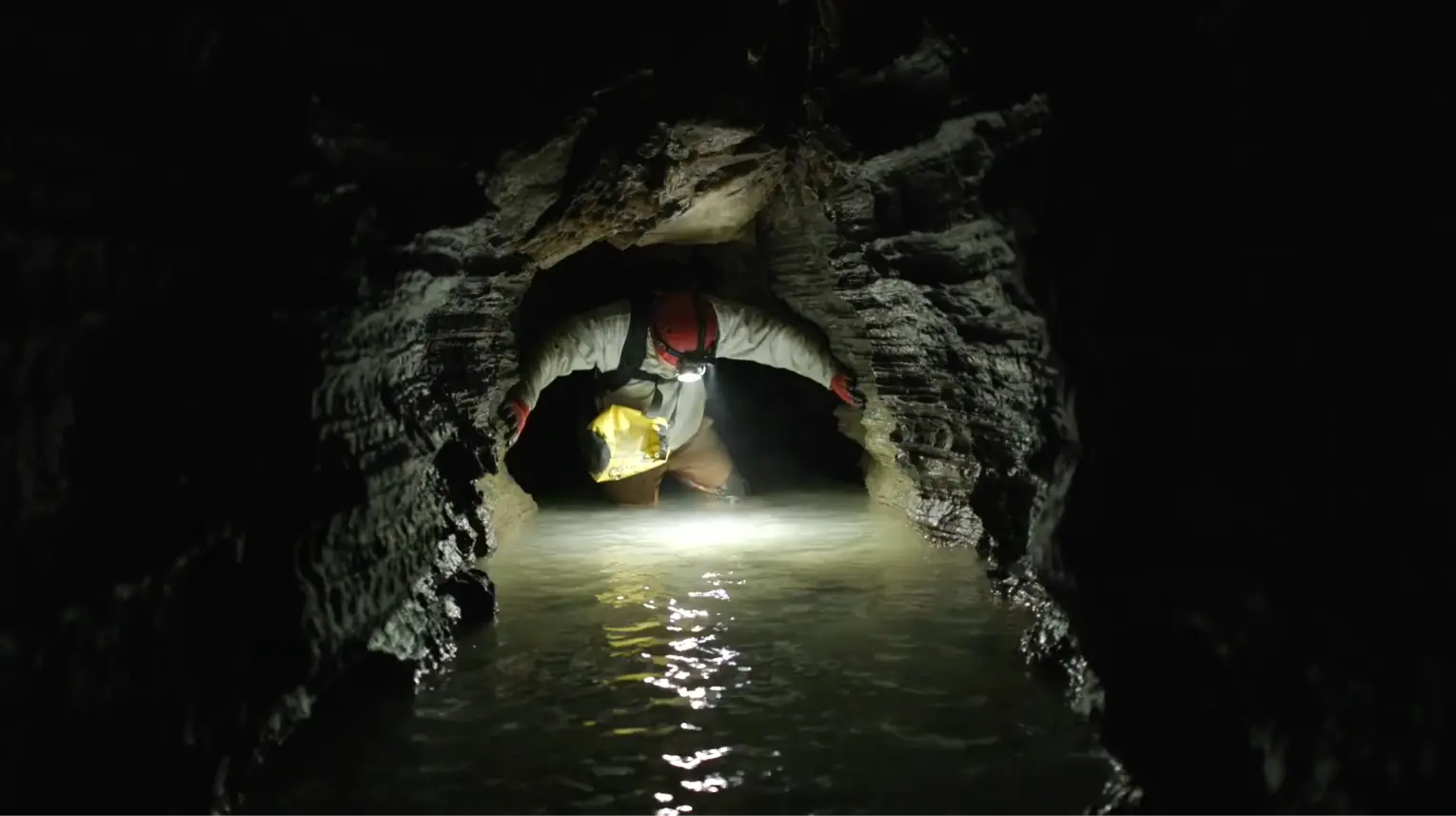
A sump is not necessarily the end of a cave. It is the point at which air gives way to water. Exploration must then change methods or accept the boundary.
For a diver, an unknown flooded passage can multiply risk quickly: overhead rock, confined space, poor visibility, entanglement, depth, and no direct ascent. The question was never how to make that risk seem ordinary. It was how to gather useful evidence before asking a person to enter.
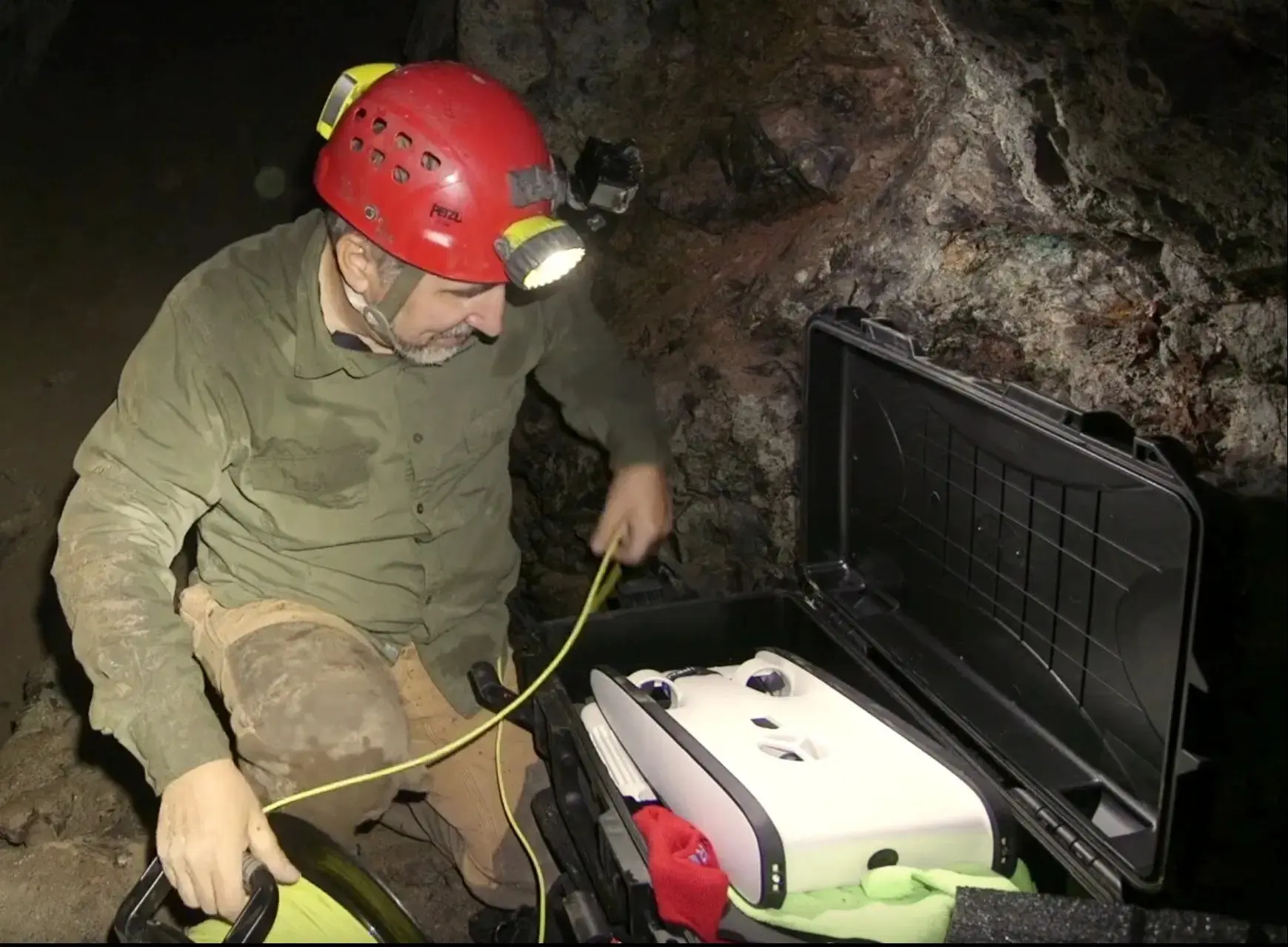
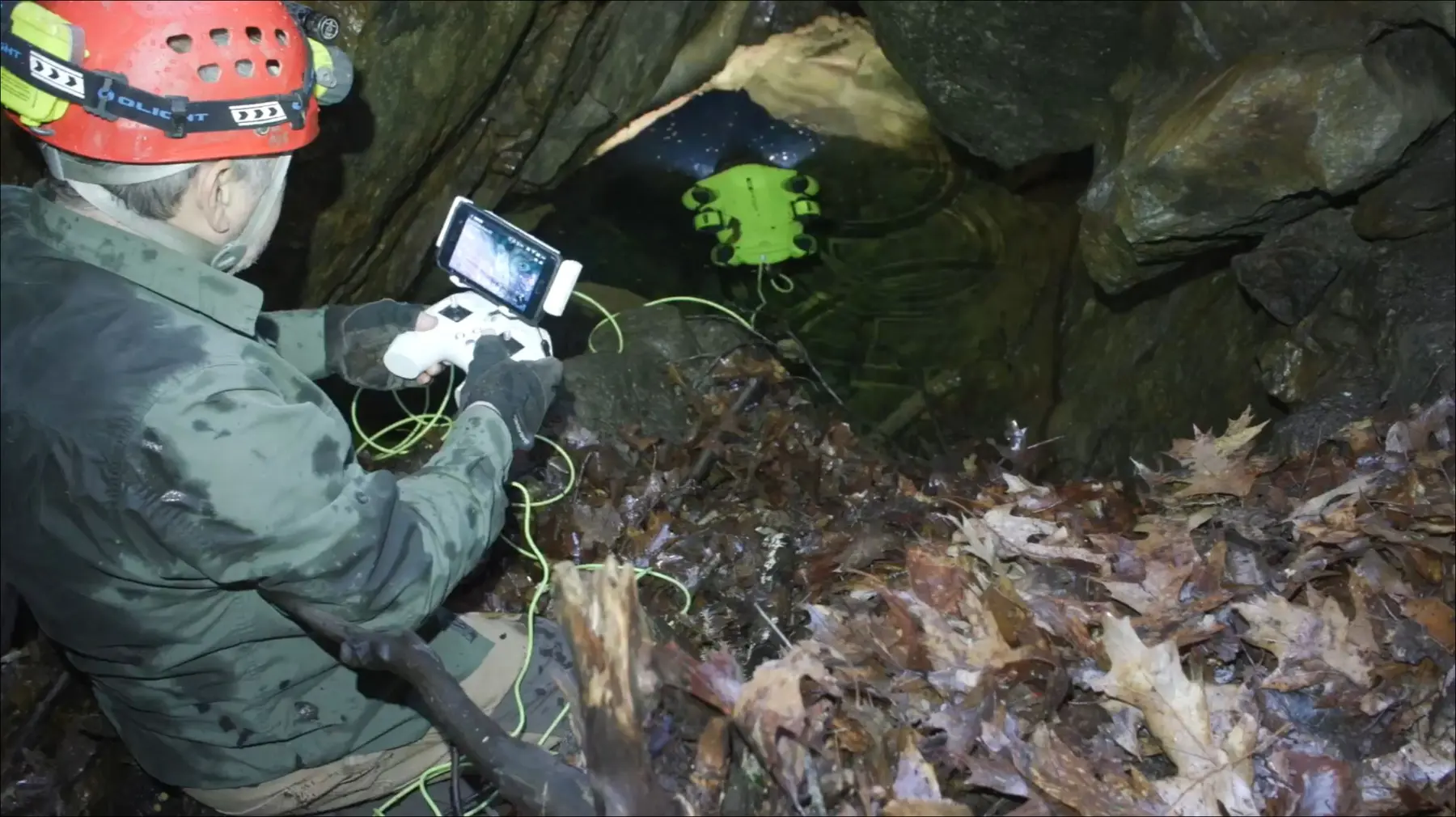
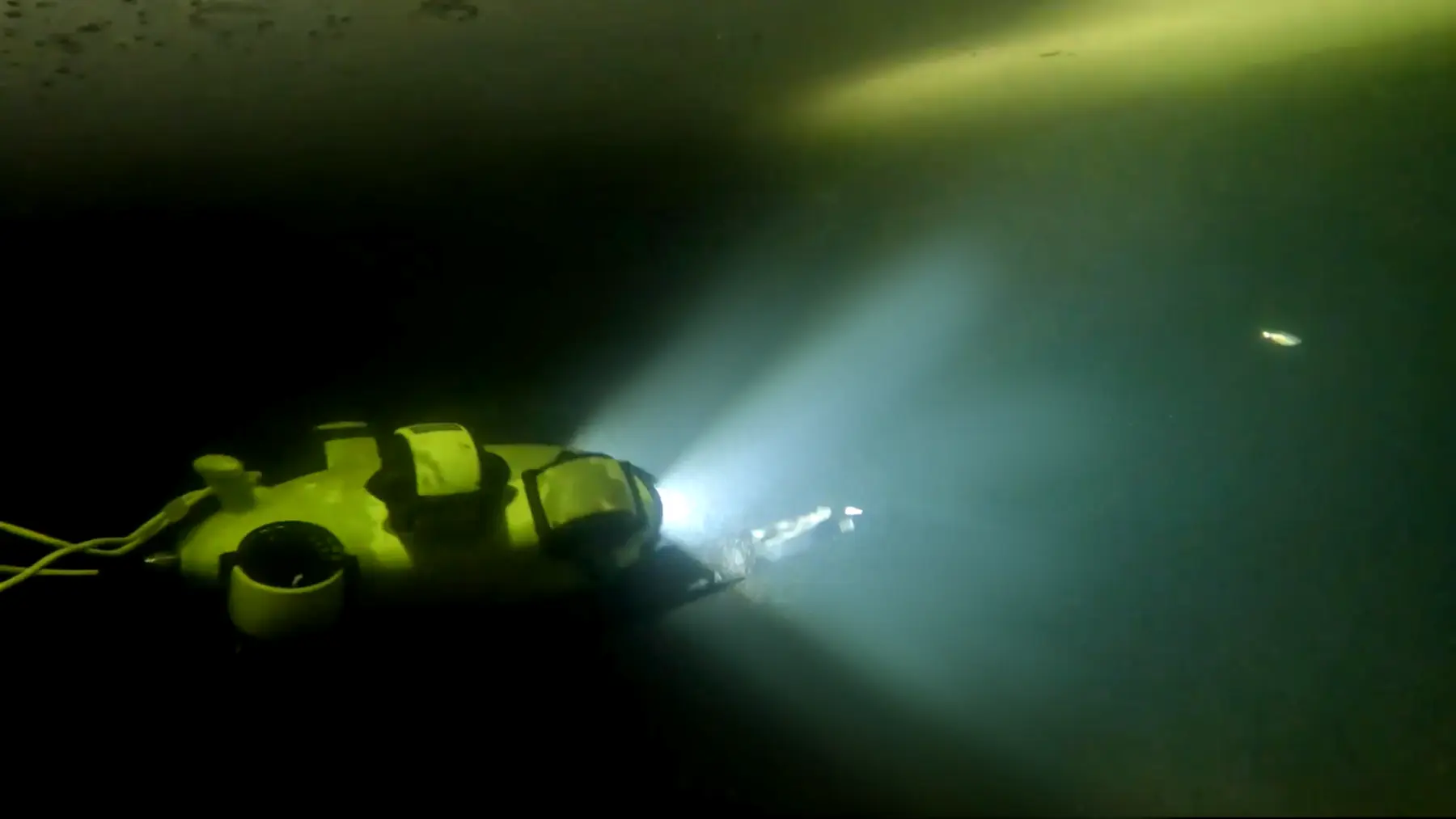
Small remotely operated vehicles offered a way forward. A camera, lights, propulsion, and a tether could carry observation past the waterline while the operator remained on the dry side of the decision.
02 · Learning in mines
Test where failure can remain a lesson.
Flooded mines became classrooms: difficult enough to expose weaknesses, varied enough to develop judgment, and accessible enough to bring the machine home, revise it, and try again.
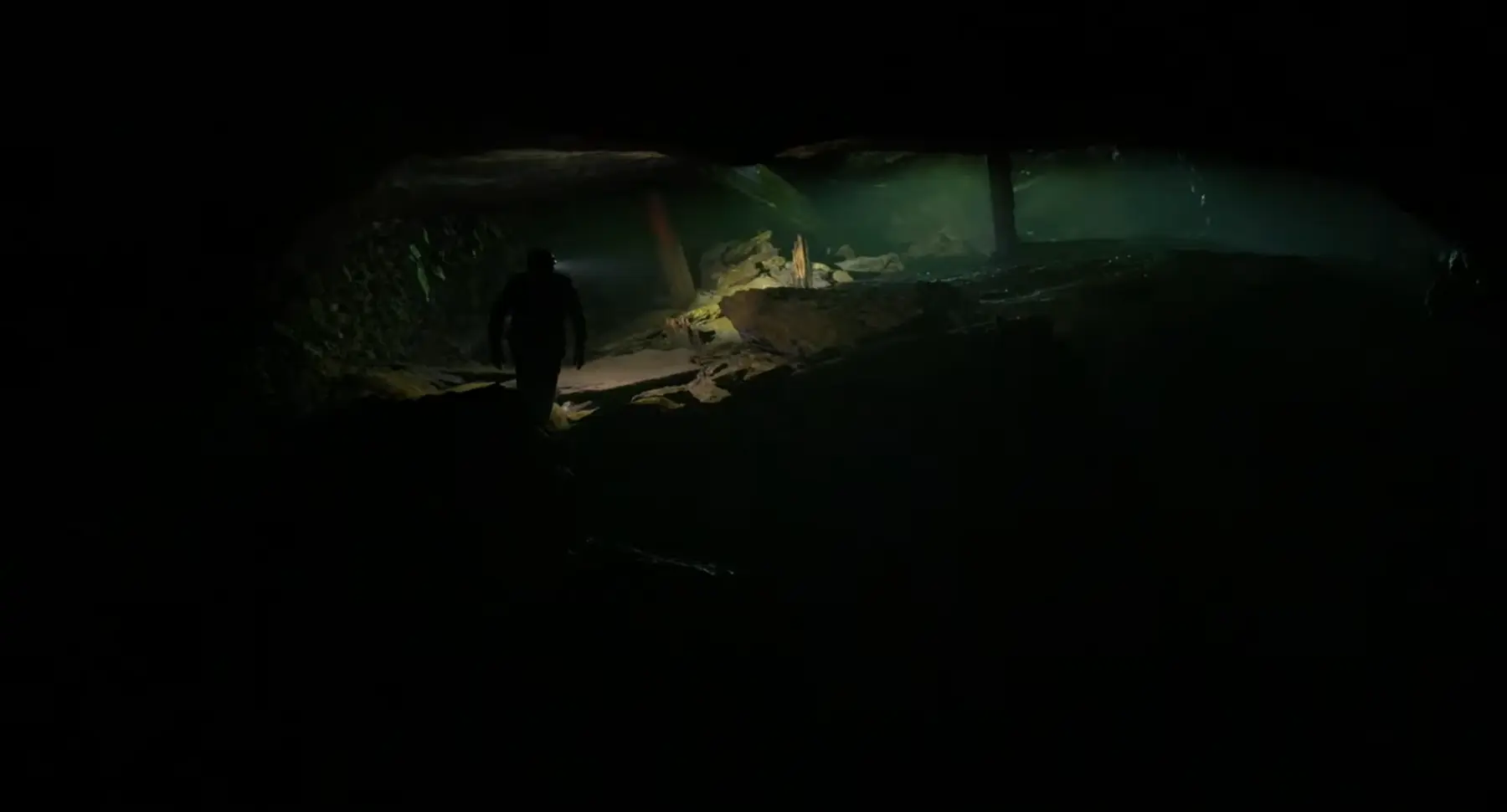
With help from electronics engineer Richard Gallo, the first system became more than a consumer device. Each deployment raised practical questions that specifications could not answer underground.
- 01Move through darkness
Lights must reveal structure without turning suspended sediment into a white wall.
- 02Manage the tether
The lifeline also catches corners, timbers, rock, and itself. Route choice matters.
- 03Return with context
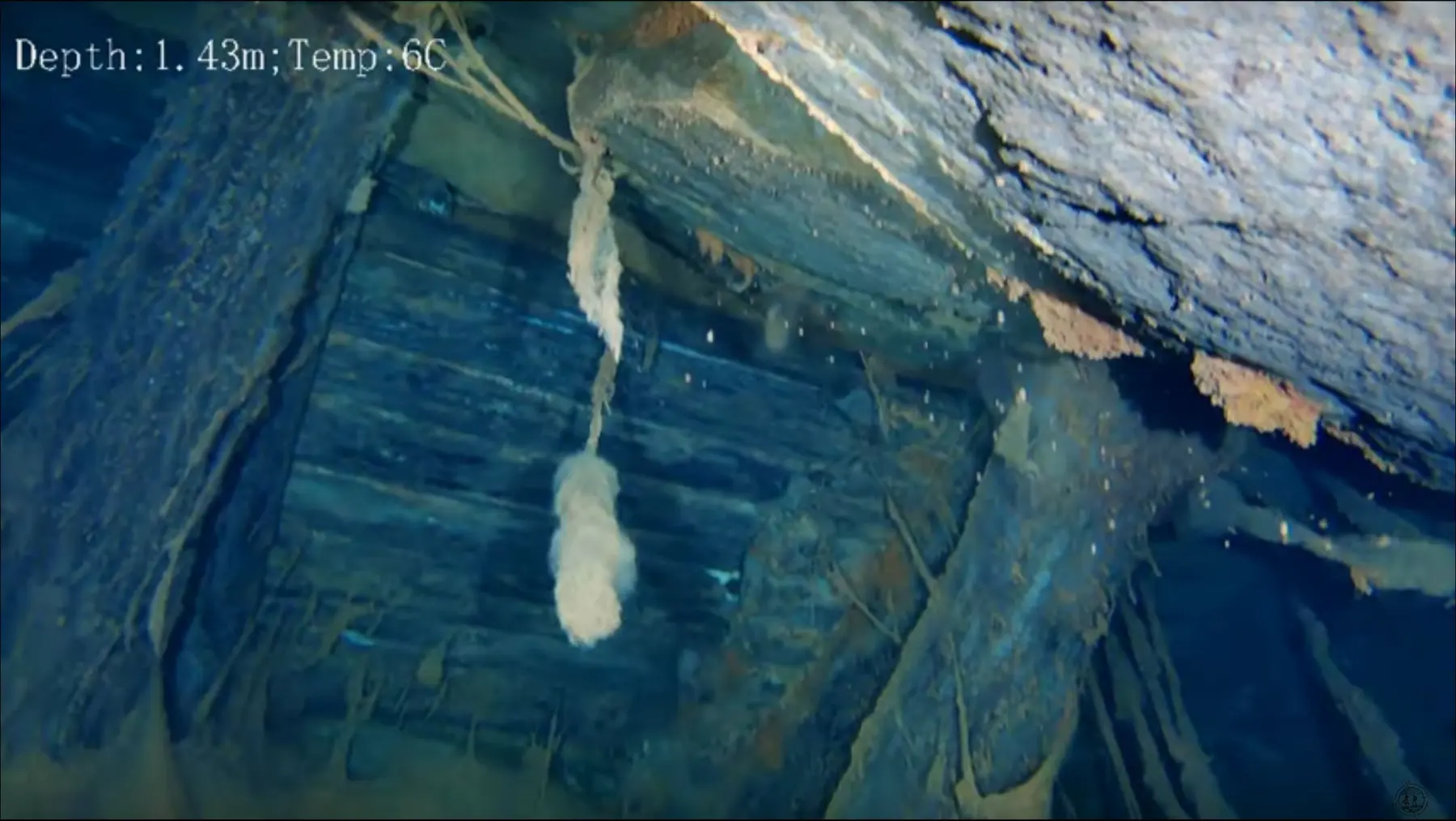
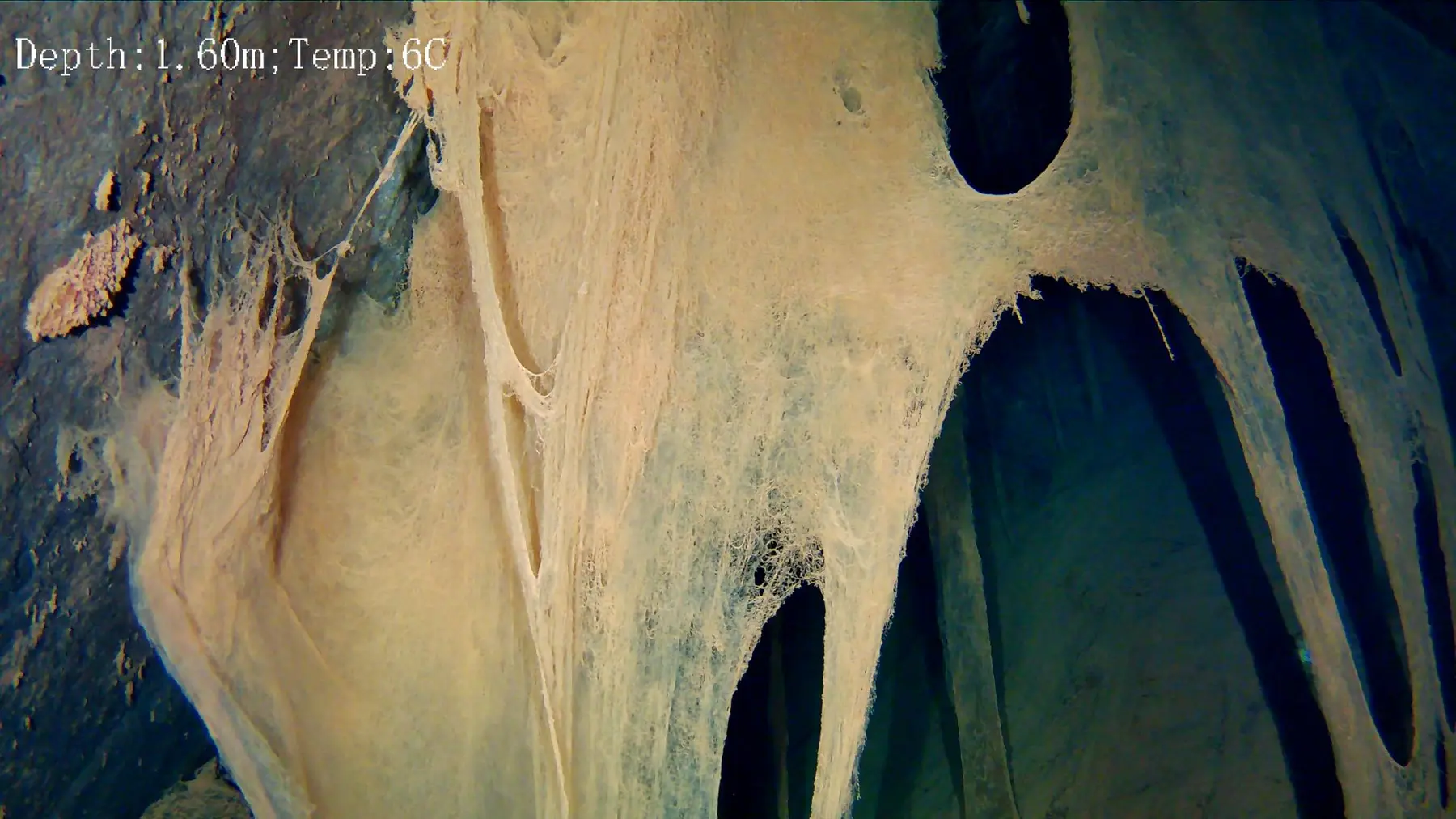
Footage is evidence only when its orientation, depth, and relationship to the entrance remain intelligible.
03 · Schoharie Cavern
A return to a passage first crossed generations earlier.
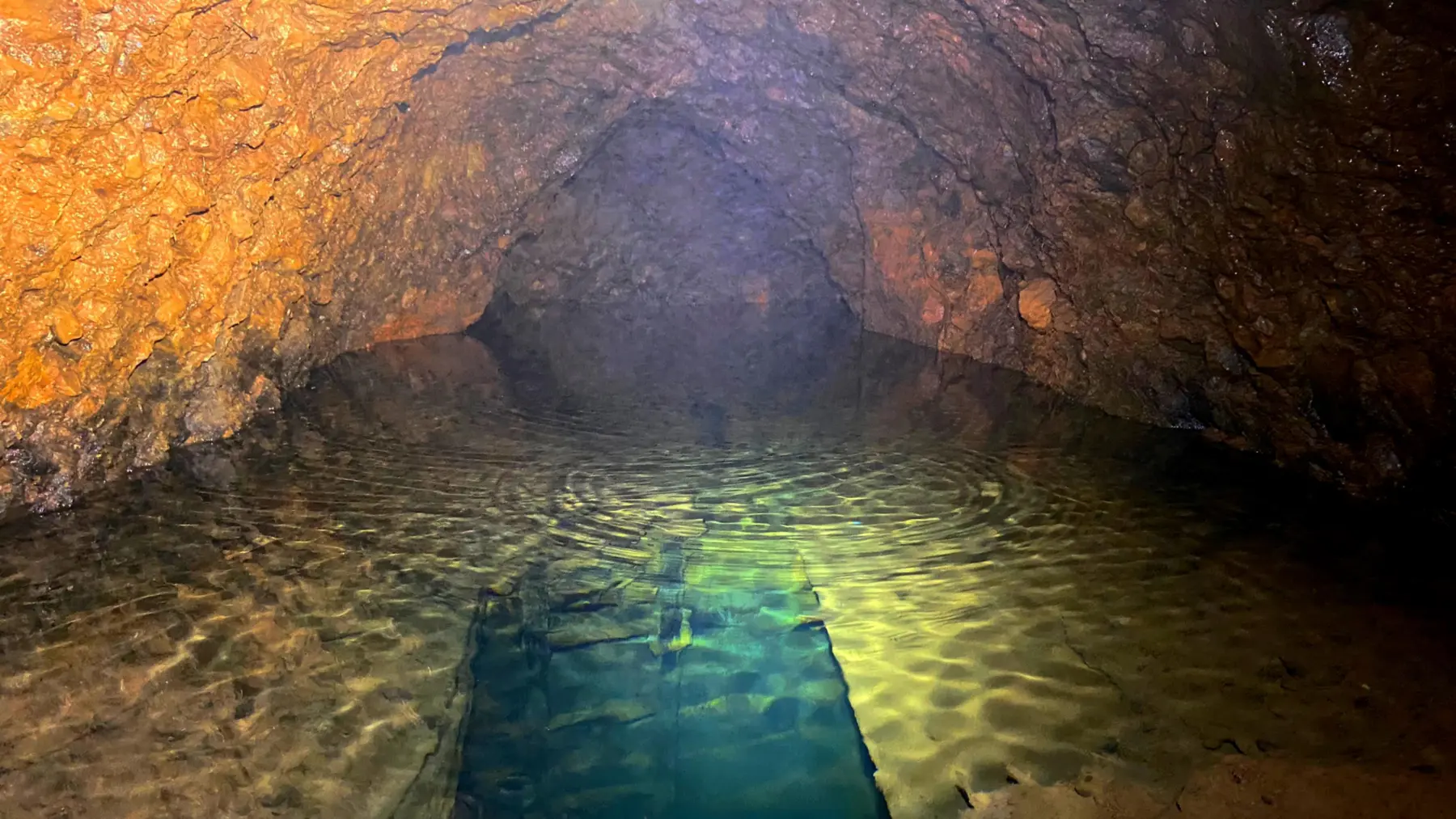
More than half a century after Russell Gurnee's exploration, the water in Schoharie Cavern still guarded the route beyond.
The work began well before launch: carrying equipment through the cave, establishing a protected control position, arranging the tether, and deciding what information mattered if visibility collapsed. The machine could cross the sump, but every choice still belonged to the people on the near side.
The robot does not remove uncertainty. It lets us meet uncertainty with evidence before exposure.
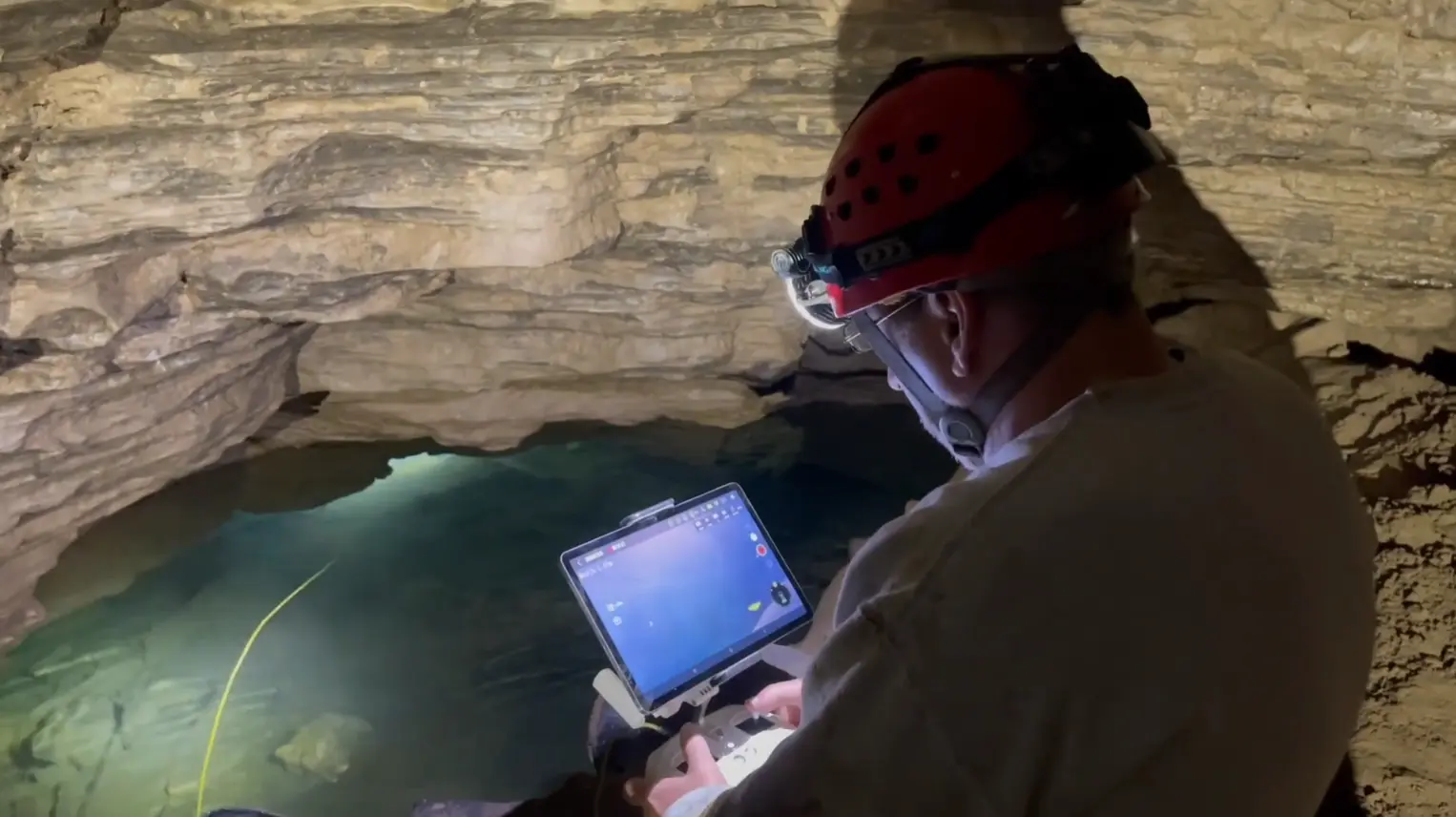
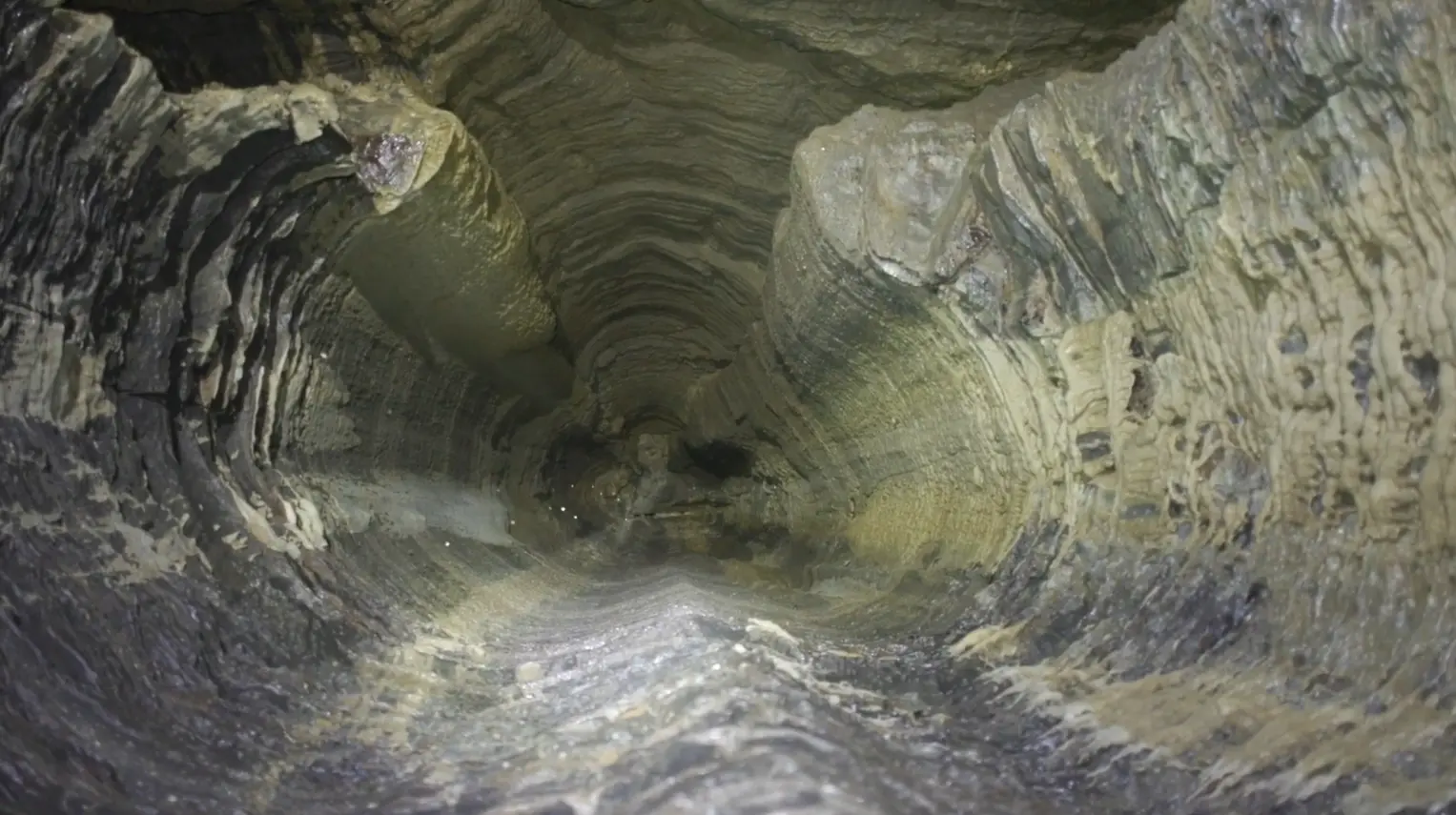
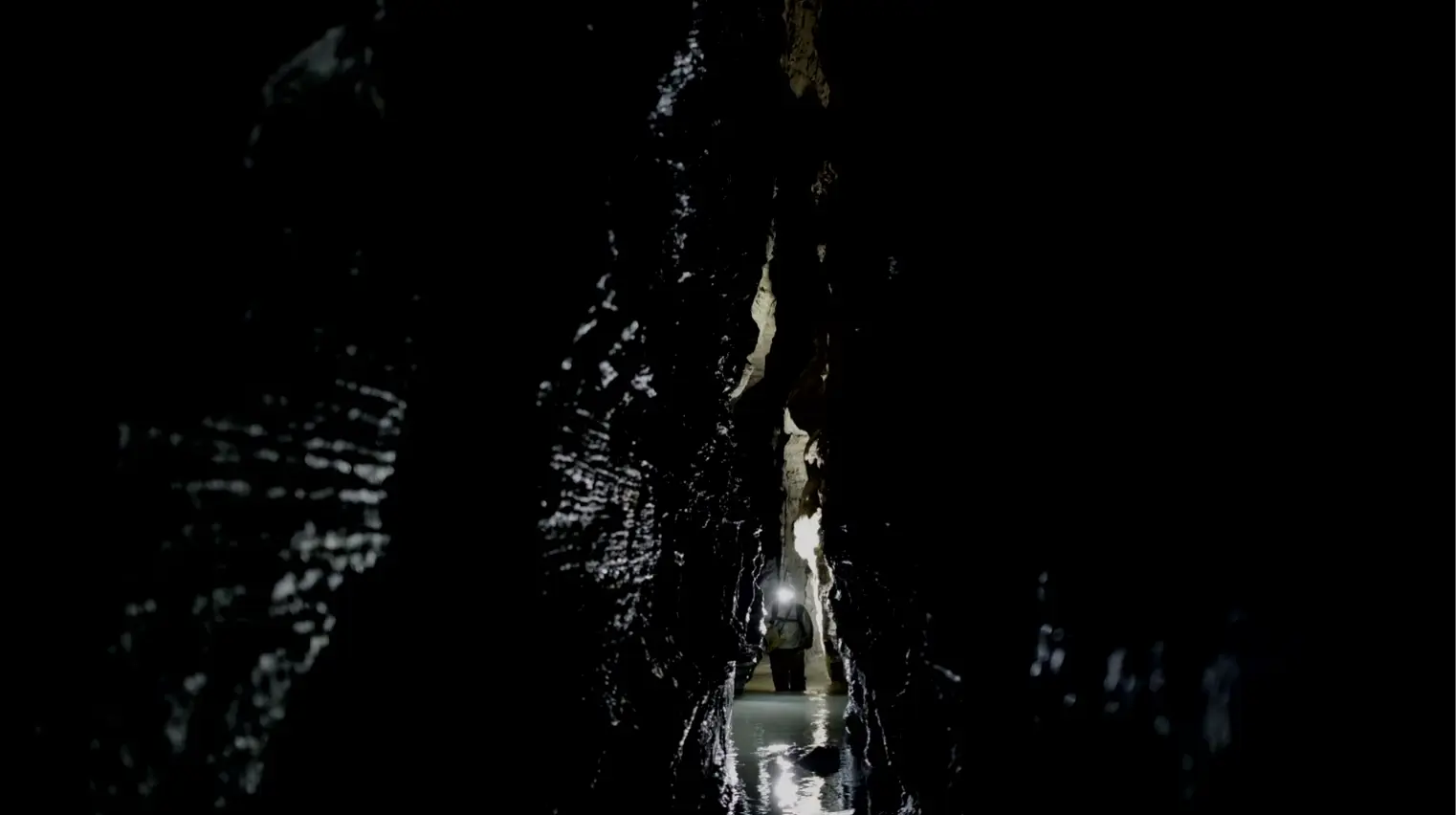
The Schoharie expedition film received Best of Show in the National Speleological Society Video Salon. Read the Schoharie field record →
04 · Sistema Calera
From testing a machine to investigating a site.
At Calera, the ROV was no longer the subject of the expedition. It had become part of a larger method, one tool among rigging, observation, documentation, and paleontological interpretation.
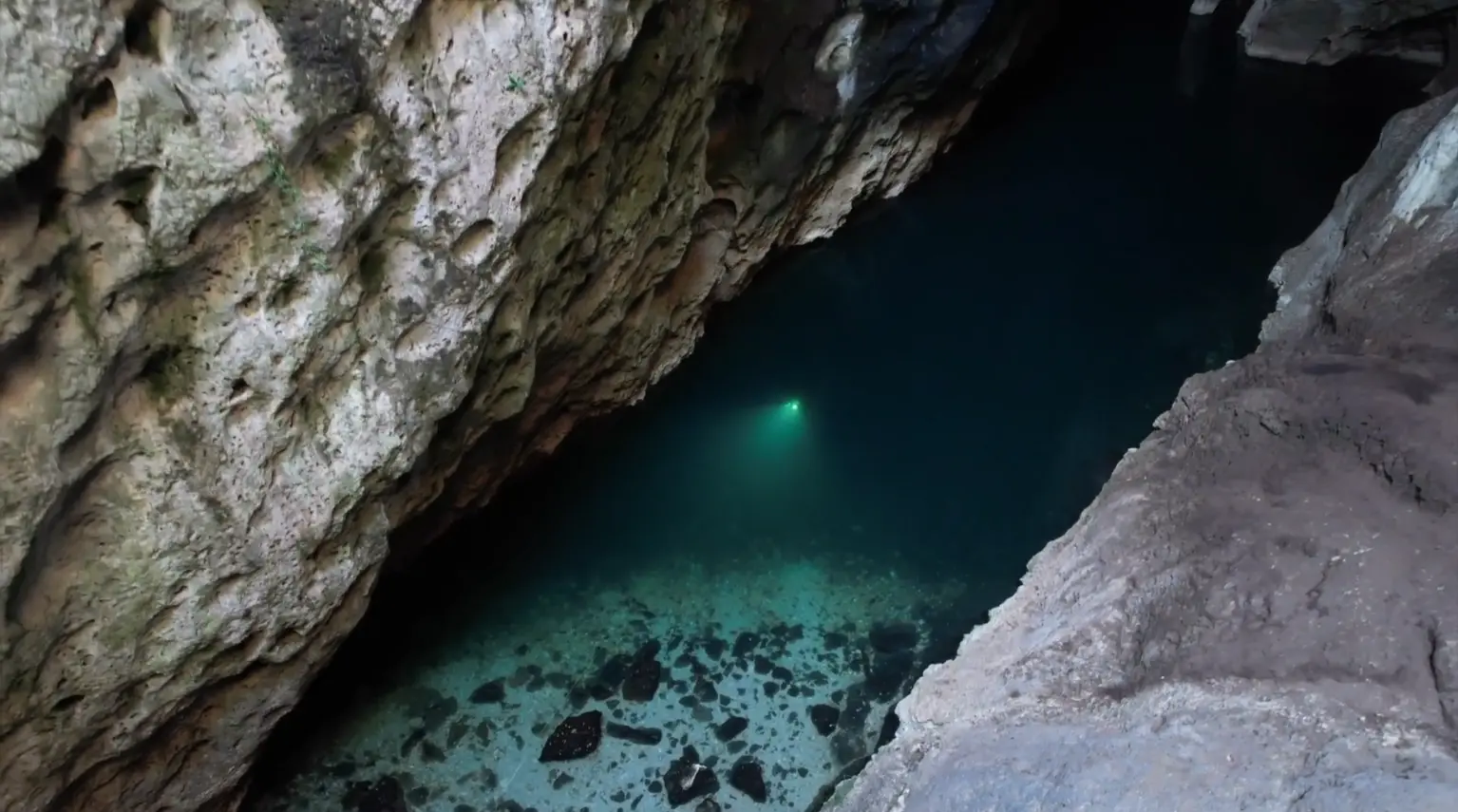
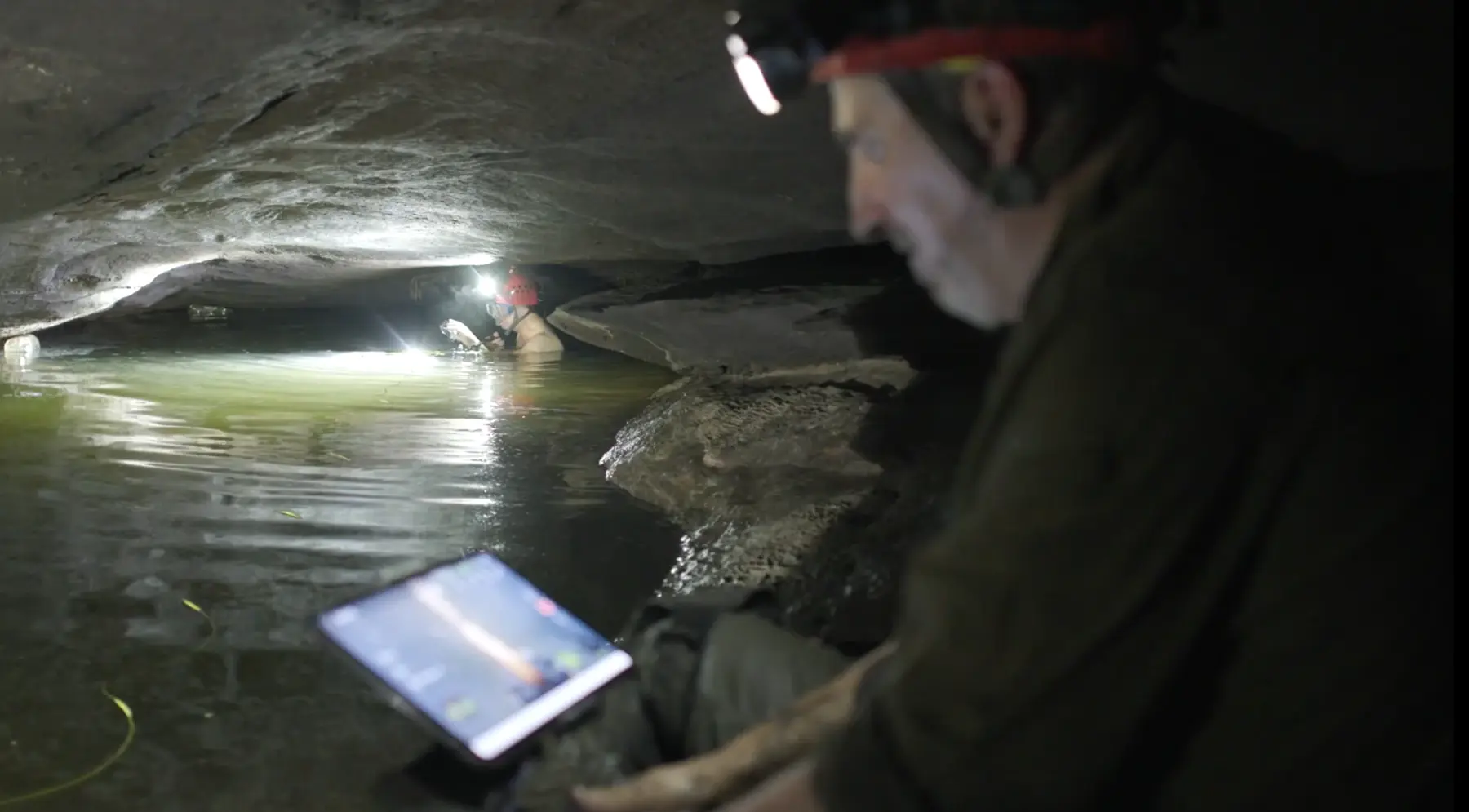
Observation becomes evidence
The camera found more than passage.
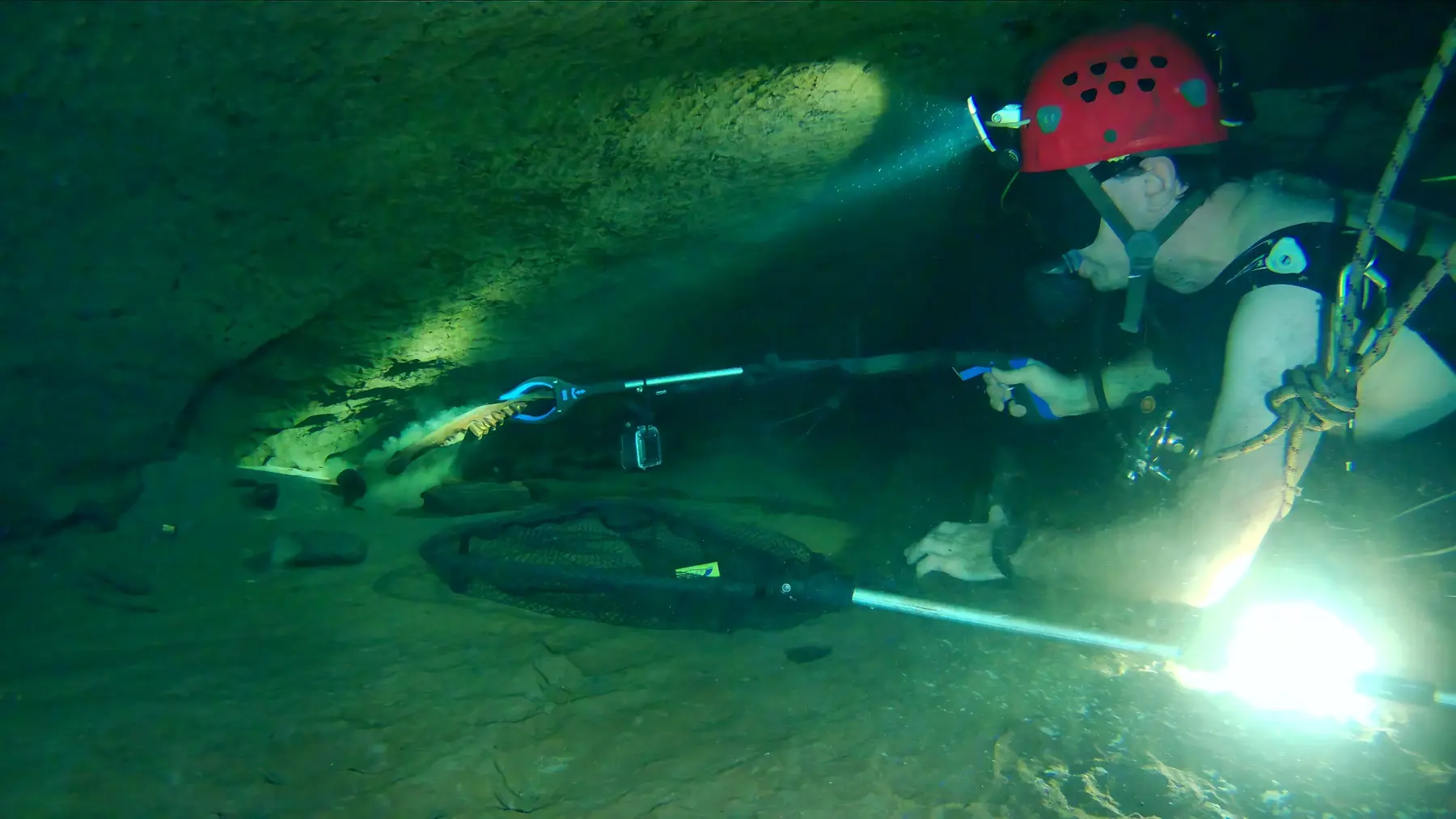
At Lake Luis and the Camelid Sump, underwater images helped place fossil material within its submerged context. A light on a vehicle could not answer every scientific question, but it could show what was present, where it lay, and what a later investigation needed to protect.
Read the complete Sistema Calera story →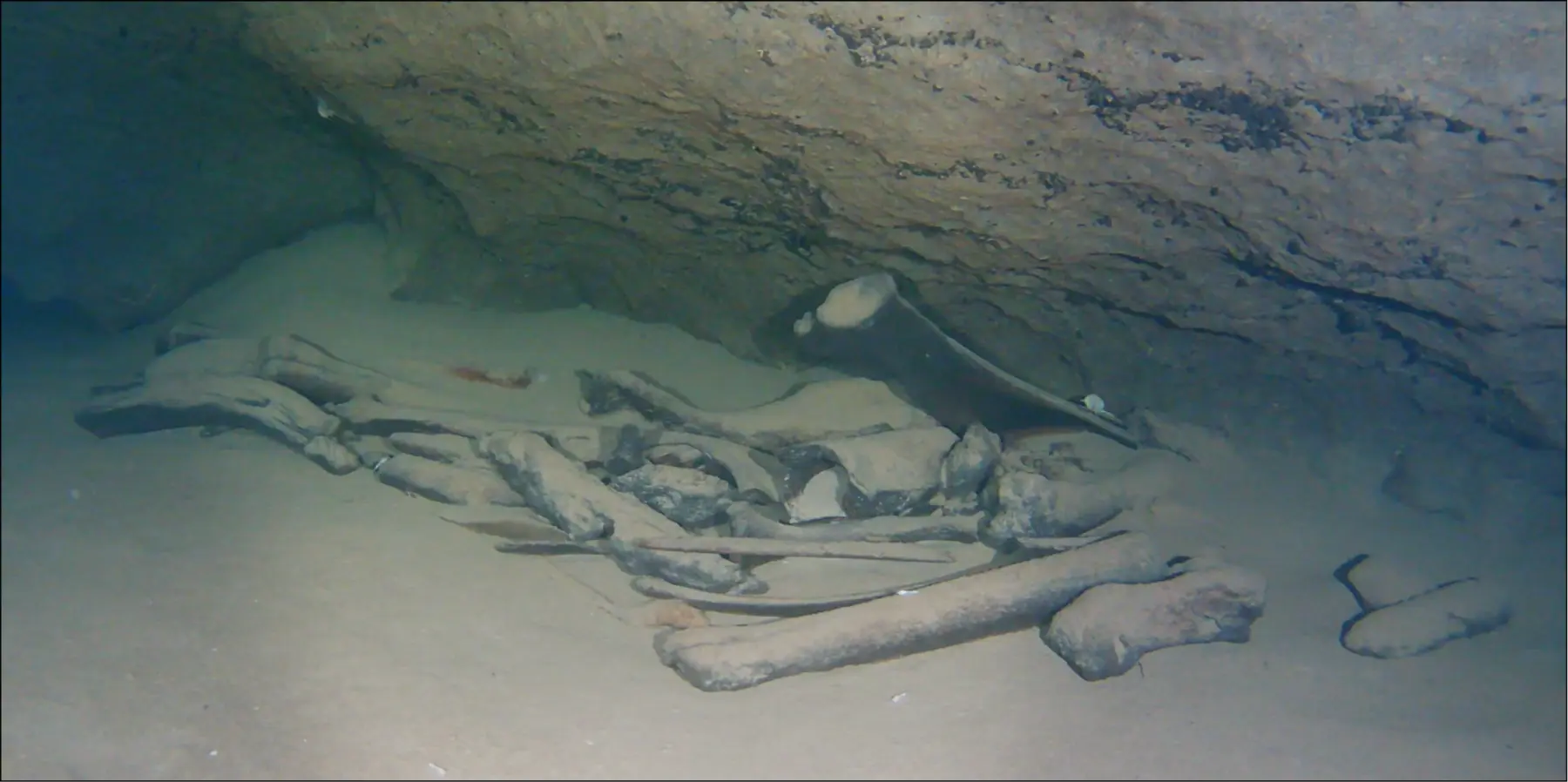
05 · Limits of the method
The safest machine is still not an explorer.
An ROV has no instinct for unstable rock, no memory of the passage behind it, and no understanding of why an object matters. It sees only what the camera, lights, water, and operator allow it to see.
Tethers snag. Thrusters disturb sediment. Distance flattens on a screen. A strong image can tempt interpretation beyond the evidence. Good robotic exploration depends on knowing when to continue, when to change approach, and when the responsible decision is to turn back.
Explore the equipment ↗Send light first.
Let observation narrow the unknown before a person is asked to enter it.The work continues
Technology does not make the discovery.
It extends observation, returns evidence, and allows the next question to be asked with greater care.