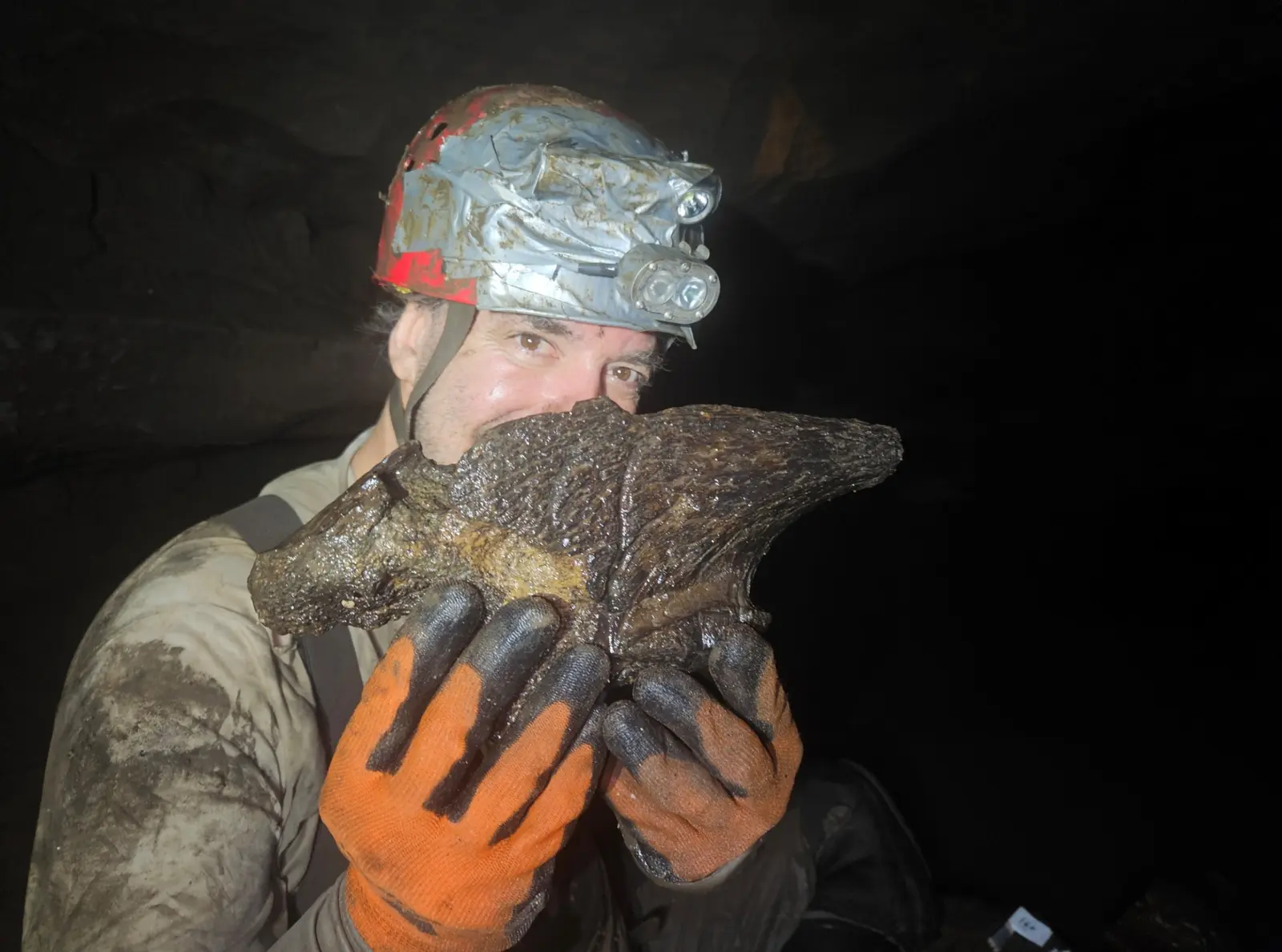
Giant ground sloth
Scale made tangible.
A 17-inch claw element brings the size of the lost animal into immediate human proportion.
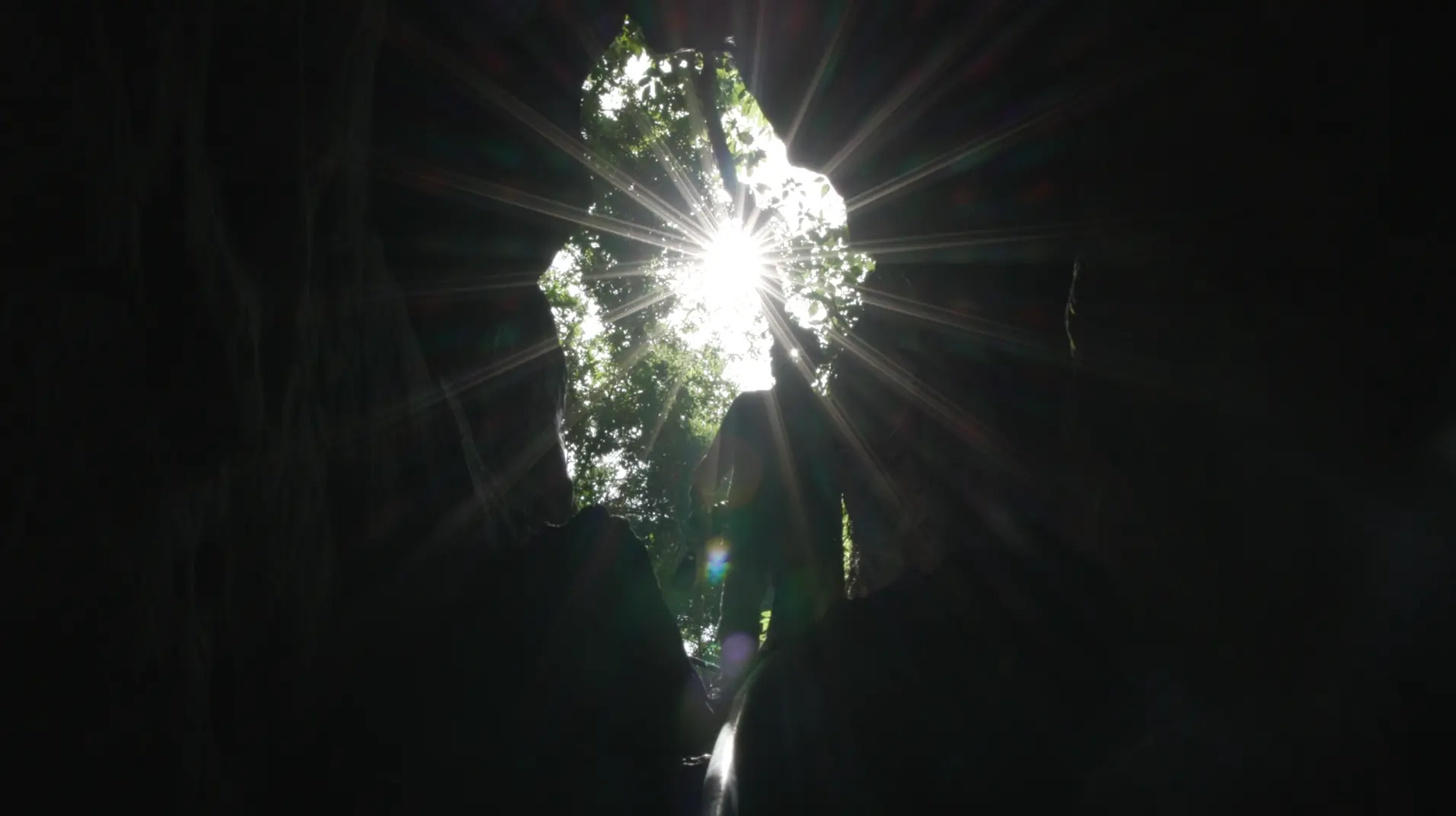
Expedition file 01 · Sierra de El Abra
A Late Pleistocene archive beneath the mountains of San Luis Potosí, reached by rope, patience, and a small underwater robot named Robo‑Teddy.
01 · The archive
Sistema Calera is more than a cave containing fossils. It is a moving archive, one in which water, mud, gravity, and time have repeatedly carried the remains of Ice Age animals through the mountain and into flooded passages below.
The system extends for more than a kilometer beneath the Sierra de El Abra. Its vertical entrances open into a connected world of shafts, dry passages, sediment slopes, pools, and sumps. Nearly 800 fossil remains have been recorded across that terrain, but their meaning cannot be read from a list of species alone.
The harder questions concern movement and context: where an animal entered, how its remains travelled, when water rearranged them, and what the resulting pattern can still tell us about changing ecosystems and perhaps the people who knew them.
02 · The descent
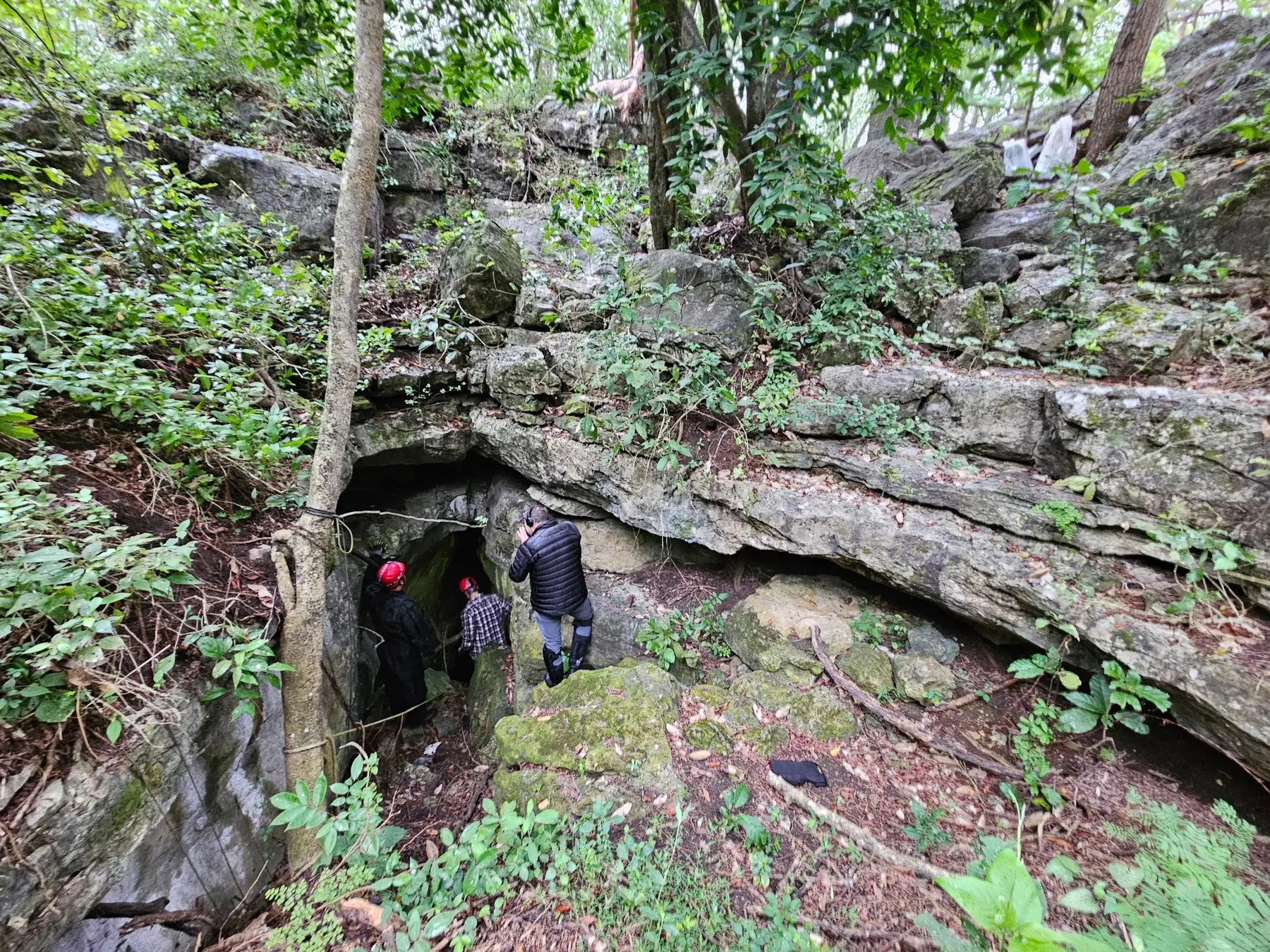
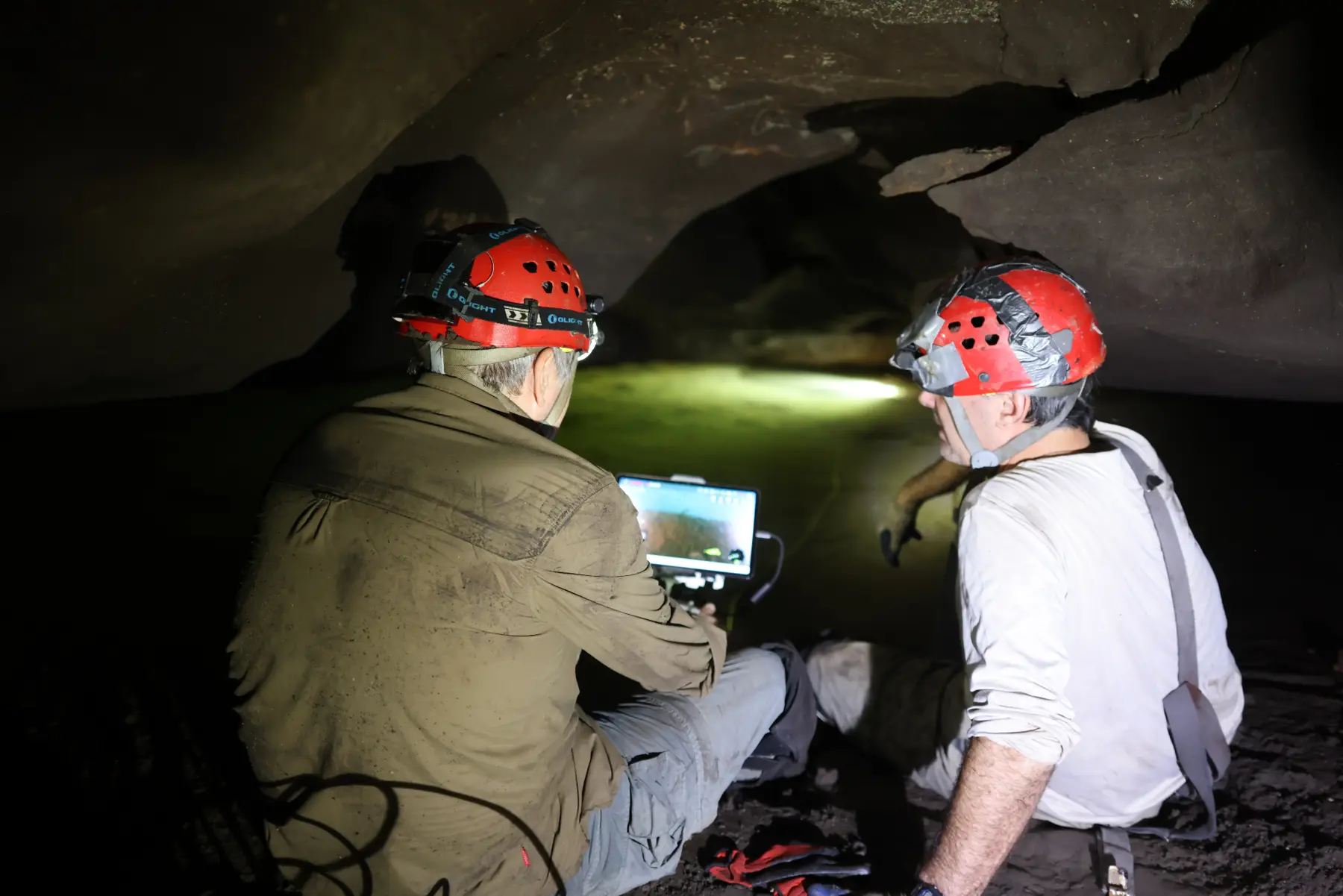
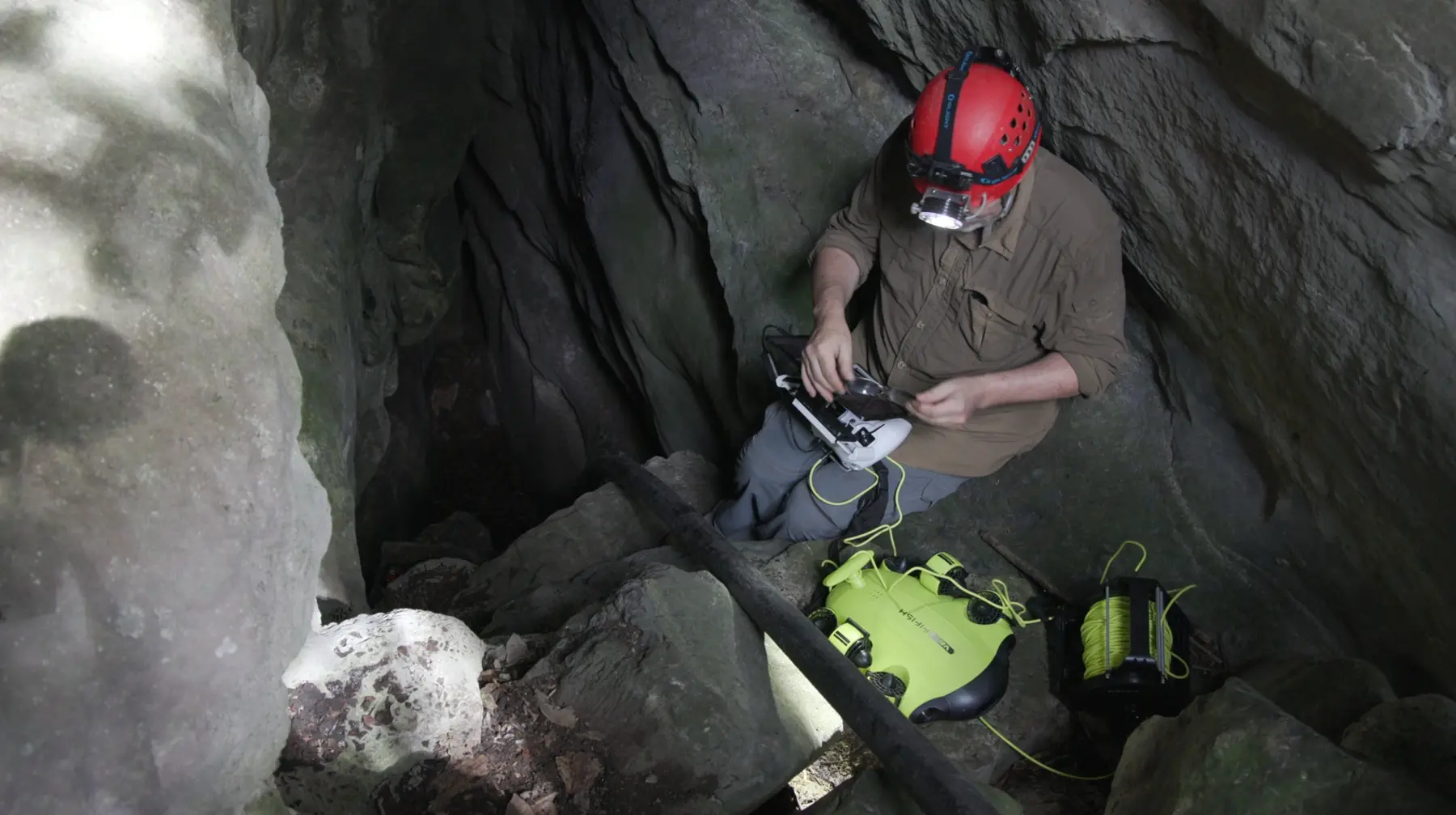
Sótano del Toro and Toro II are not doorways in the ordinary sense. They are vertical interruptions in the forest floor, followed by constricted passages where every case, light, line, and battery has to move with the team.
Farther in, the cave changes character. Slopes of transported sediment lead toward Lake Luis and the Camelid Sump. Fossils appear in crevices, on ledges, in mud, and beneath clear water. Their positions are evidence: a record of repeated movement downslope rather than a single untouched deposit.
“The discovery is only the beginning. The real work is learning why it is there.”
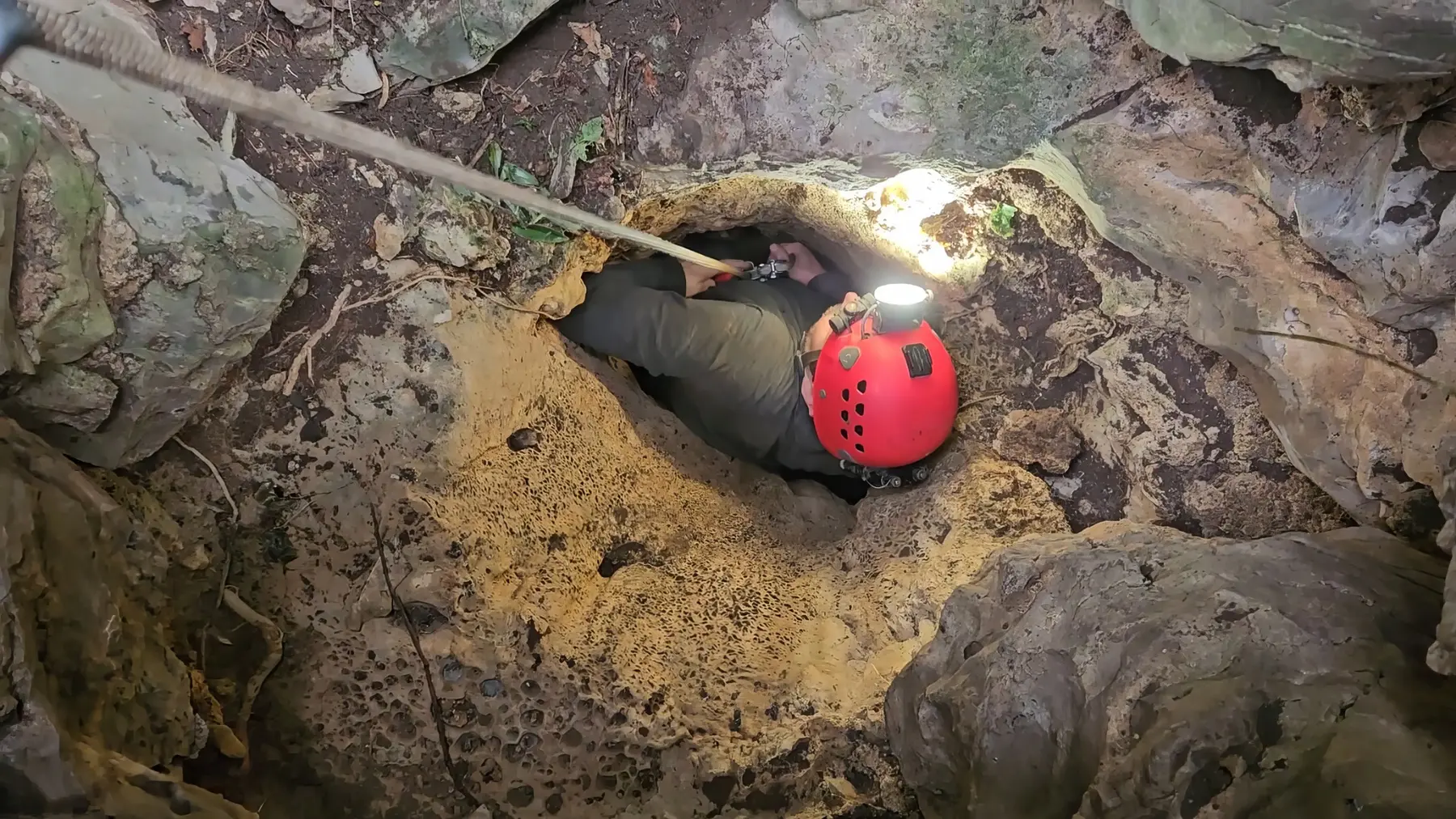
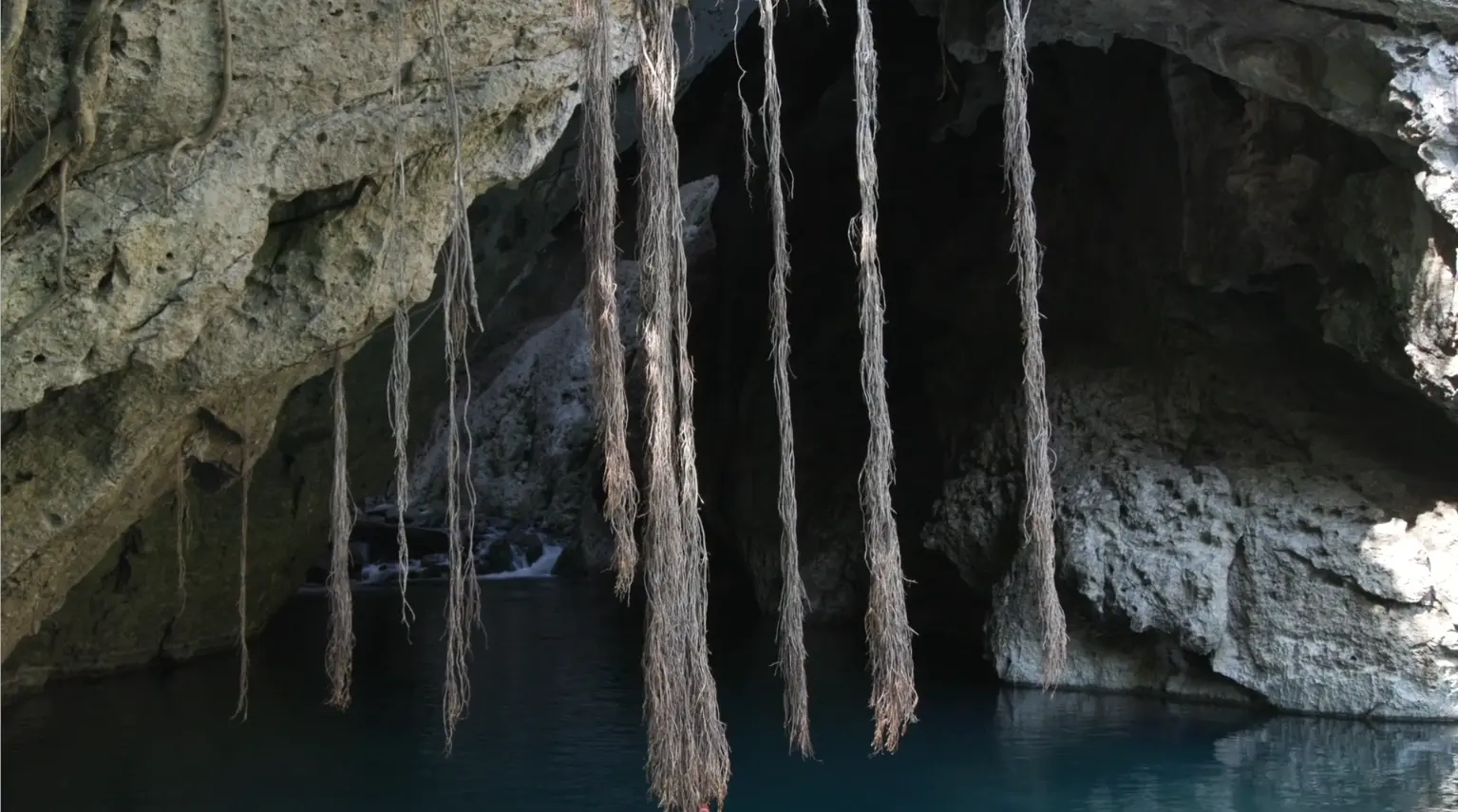
At the waterline, the known cave gives way to another landscape.
03 · Beyond the sump
Robo‑Teddy is a compact tethered ROV small enough to enter flooded passages, stable enough to carry a camera and lights, and expendable where sending a diver would be the wrong decision.
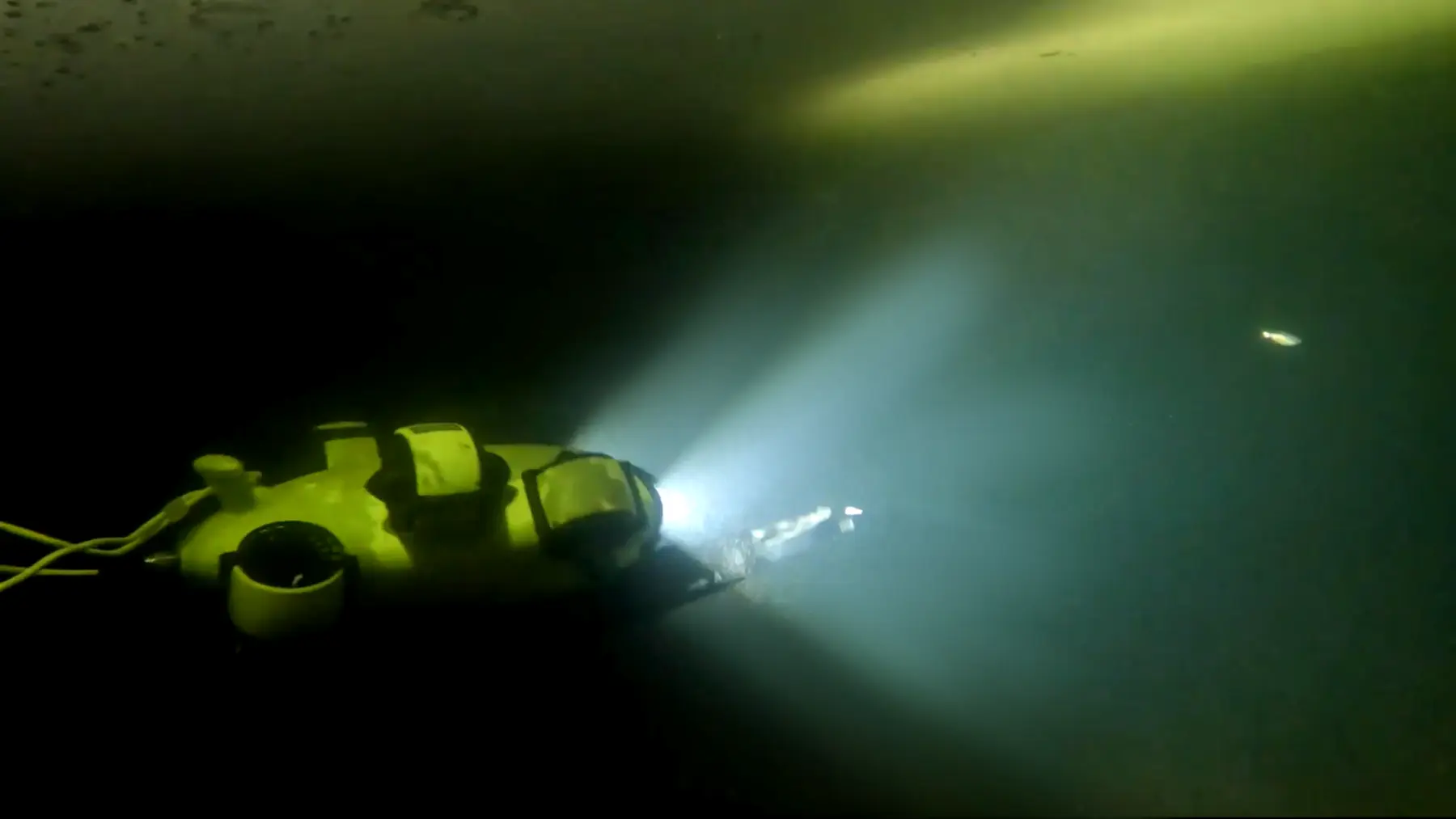
At Lake Luis, the vehicle carried the team's point of view beneath the surface. The live feed turned an opaque boundary into navigable space: ceiling, floor, silt, passage direction. Then came bone.
Video does not identify a specimen or prove an interpretation. It does something more basic and equally important: it shows what is present, where it lies, and which questions can responsibly be asked next.
Record position, scale, surroundings, and uncertainty before recovery is considered.
04 · What the water kept
Horses, camelids, bison, mammoths, gomphotheres, giant ground sloths, short‑faced bears, turtles, and smaller cave-adapted animals all appear in the wider archive. Together, they describe changing communities across thousands of years.
A 17-inch claw element brings the size of the lost animal into immediate human proportion.
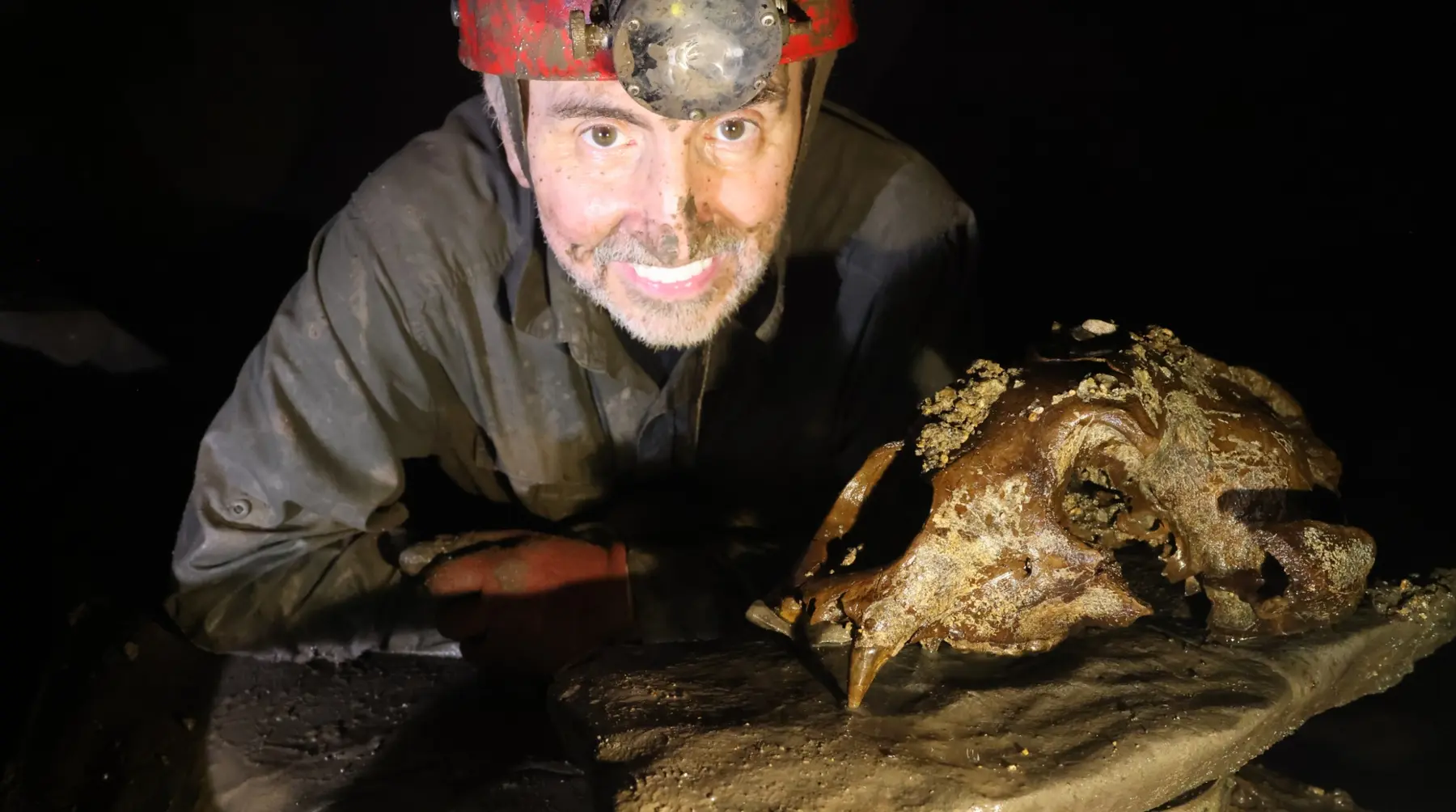
The skull is both an extraordinary object and a data point whose position and history must be reconstructed.
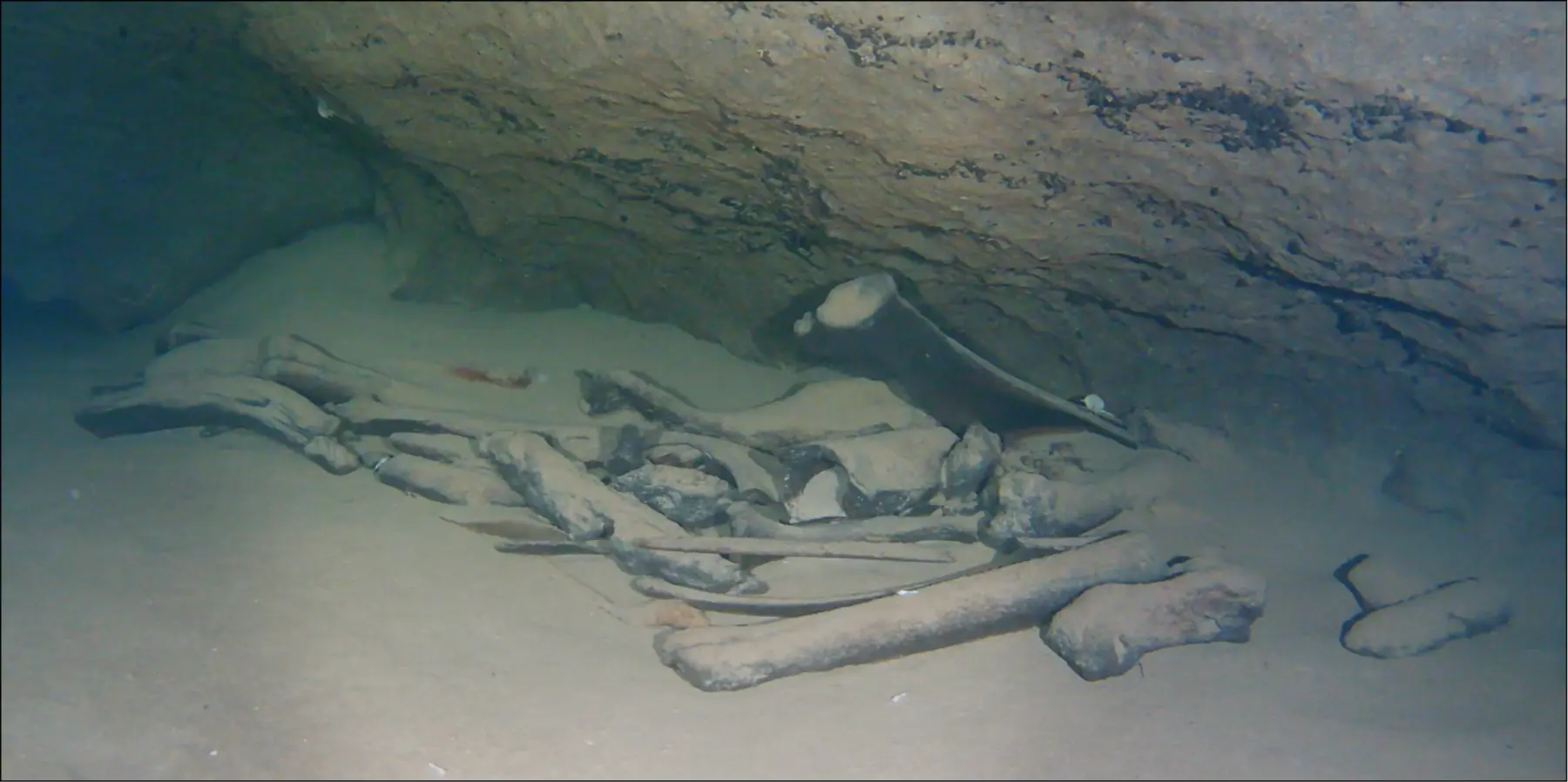
Submerged remains preserve relationships that can disappear the moment an object is separated from its setting.
Radiocarbon results
c. 8,500–30,000 calibrated years before presentA long record, assembled one specimen and one context at a time.05 · The question shifts
The next phase turns toward a more difficult question: whether some bones preserve evidence of deliberate human modification and what that might mean for the timing and behavior of people in this region.
That question cannot be answered with a dramatic photograph. It requires controlled cleaning, cataloguing, comparison, radiocarbon dating, and close work with specialists. Observation, interpretation, and confirmation must remain visibly separate.
ROV work at Lake Luis extends observation beyond the human route.
Return work documents more passage, context, and fossil material.
Dating, research, writing, film, and peer-reviewed work begin to connect the findings.
Planned fieldwork focuses on context, careful cataloguing, and possible human modification.
The field team
Sistema Calera brings together cave exploration, underwater robotics, biospeleology, paleontology, archaeology, and the local knowledge required to work responsibly in a complex place.
The wider research network includes collaborating paleontologists and archaeologists in Mexico and the United States. Additional collaborator roles and historical details are still being researched. Individual image attributions appear in the credits.
The archive is still open
The next expedition will not begin with certainty. It will begin with a better question, a stronger record, and another careful descent.