Expedition record / Schoharie County, New York
The Passage
Beyond
An ROV journey into Schoharie Cavern’s flooded passage, and a return to a chamber known to divers but seldom seen by anyone else.
Read the field record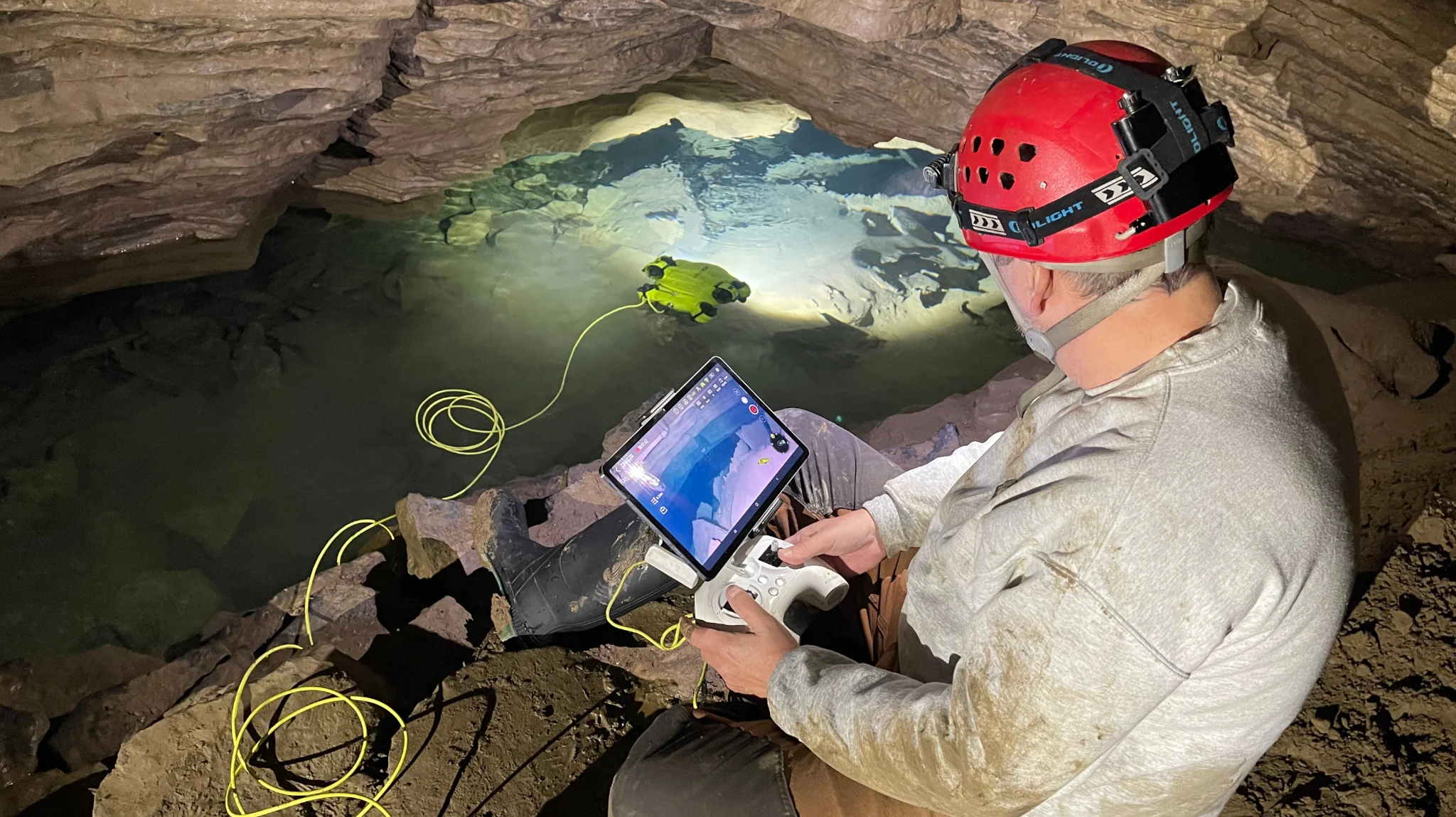
01 / An old question
Where did the water go?
Schoharie Cavern was familiar to generations of cavers. At the end of its long passage, a sump kept the next part of the cave out of ordinary sight. A small number of divers had mapped and described what lay beyond it; photographs were scarce.
Russell Gurnee and Bill Wittosh made an early dive attempt in 1960. Other divers followed across the next three decades, gradually extending the survey through submerged and air-filled sections. Michael’s review of their reports, written before this trip, traced 22 dives and a 1989 push by John Schweyen that ended among large breakdown blocks. The ROV was not going to discover an unseen chamber. It could carry clear video back to people who knew the maps but had never watched the route unfold.
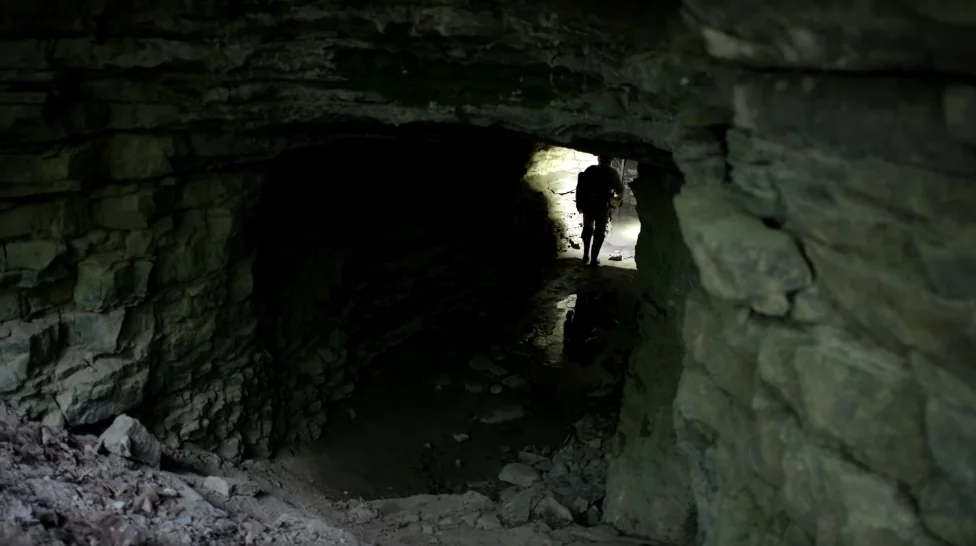
With permission arranged by Steve Millet, Mike Sandone and Michael carried the equipment through the cave. The walk included a few climbs and low places, but the load was manageable. They set up at the pool at the end of Gage Gallery and sent Robo-Teddy into Sump One.
02 / Sump One
A camera in the old route.
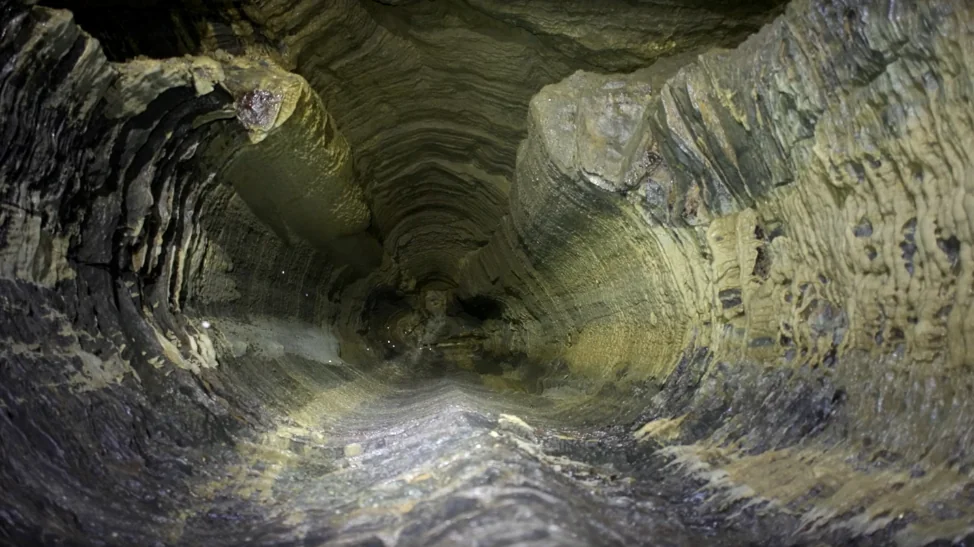
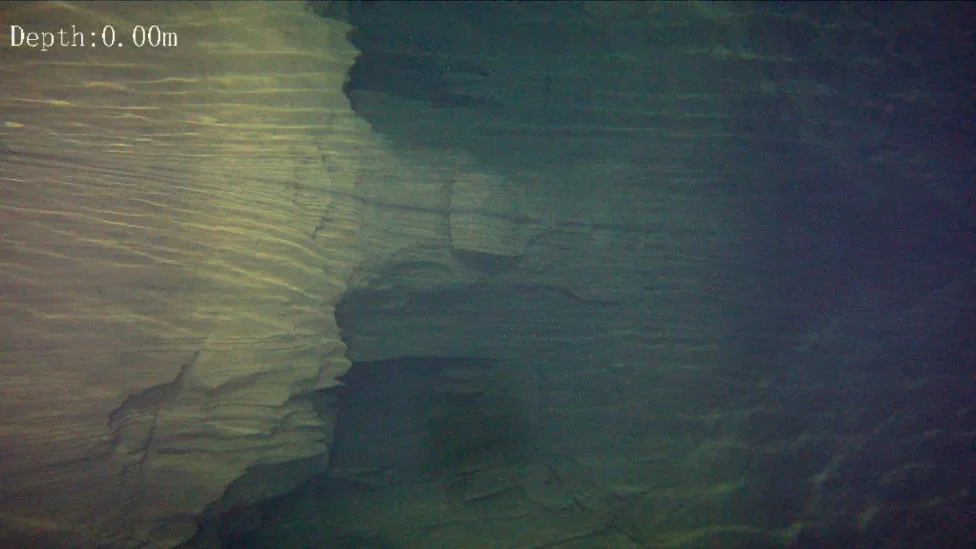
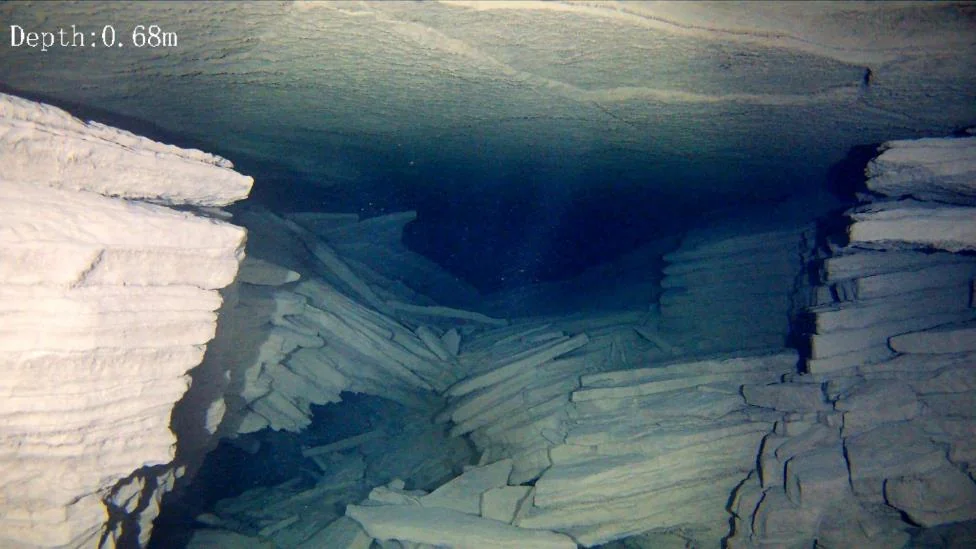
The water was clear enough to see the oval shape of the submerged limestone tube. Thin sheets and fallen blocks covered parts of the floor. Michael could also see ripples in the silt and a narrow fissure running along the ceiling. The camera recorded the changing shape of the passage instead of reducing it to a line on a survey.
More than 180 feet into the run, a steep rise of broken limestone led to something unexpected on the monitor: what first looked like another surface was a reflection. The vehicle had reached the air-filled chamber shown in the divers’ records. When its camera broke the surface, the team could see the chamber itself, an opening estimated in Michael’s account at roughly 50 feet across with more than 20 feet of air space.
That moment was the heart of the visit: a place earlier explorers had reached at considerable personal risk was visible again, from a camera operated back at the sump.
03 / The turn back
The next sump remains.
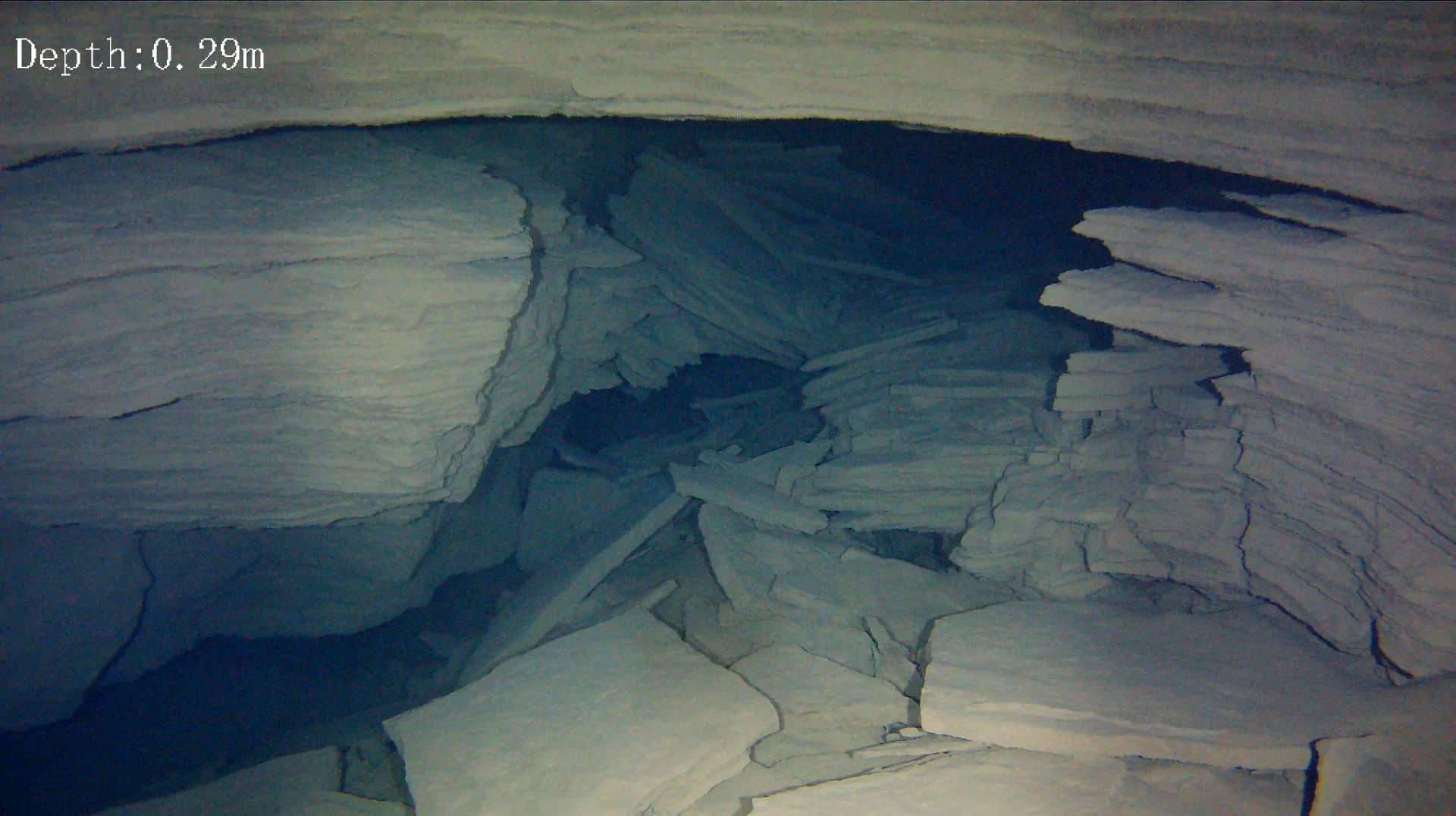
Robo-Teddy continued through a tight passage for roughly 20 feet into Sump Two. Broken limestone made the route harder to negotiate, and the controls stopped responding normally. After troubleshooting, Mike and Michael recovered the vehicle. With battery power to preserve for the return, they ended the run rather than pressing farther.
The outing brought back about 45 minutes of 4K footage. It confirmed the route to the air-filled chamber and showed part of the next flooded passage, while leaving the remainder for another attempt. The cave’s earlier divers had given them the map; the camera gave the wider caving community a view into it.
The film
See the passage.
Mike Sandone produced the documentary from the visit. Michael explored, piloted Robo-Teddy, and narrated. The film received Best of Show in the 2023 National Speleological Society Video Salon.
Watch on the NSS YouTube channel ↗Sources & credits
Based on Michael Girard’s field account, “Exploring the Deep Space of Schoharie Cavern with Karstronaut Robo-Teddy,” supplied for this page and written for The Northeastern Caver, and the accompanying image captions. Photographs by Michael Girard and Mike Sandone; underwater frames recorded by Robo-Teddy. Mike Sandone produced the film. See the image credits for individual attributions.
The historical diving sequence and distances above follow Michael’s review of published cave reports. This record omits the supplied route map and does not provide access directions.